


Indian Cooking Oils: Types, Uses & Traditional Choices
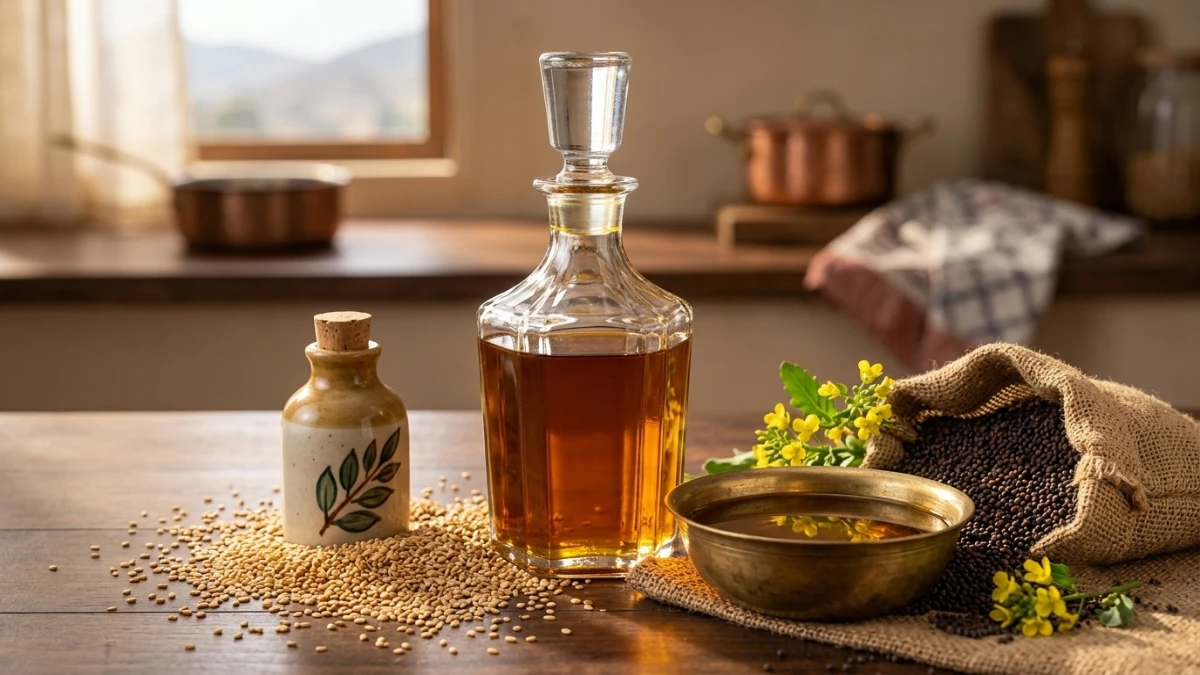
Cooking oil is more than a pantry ingredient in India. It is part of regional food traditions, everyday cooking methods and the flavour of familiar meals. Mustard oil, sesame oil, groundnut oil, coconut oil, sunflower oil, rice bran oil and other edible oils each have their own characteristics, culinary applications and place in Indian kitchens.
Choosing a cooking oil can therefore seem surprisingly complicated. Labels mention terms such as refined, cold-pressed, virgin, blended and filtered, while traditional names often carry strong regional associations. At the same time, consumers increasingly want to understand what they are buying rather than choosing an oil simply because it is familiar.
This guide explains the main types of Indian cooking oils, how they are produced, where traditional oils fit into Indian cuisine, and what to consider when choosing an oil for everyday cooking.
Why Cooking Oils Matter in Indian Food
Oil plays several roles in cooking. It can provide a medium for sautéing, frying and tempering, contribute to texture and carry the flavours of spices and other ingredients.
In Indian cooking, oil is also closely connected with technique. A small amount may be heated for tadka or tempering, while larger quantities may be used for shallow frying or other preparations.
The choice of oil can influence the flavour and character of a dish. Mustard oil, for example, has a distinctive pungent character, while sesame oil brings its own nutty aroma and culinary identity.
Oils and fats also have a nutritional role. The Indian Council of Medical Research’s Dietary Guidelines for Indians includes cooking oils and fats within its broader dietary guidance.
What Is Edible Cooking Oil?
Edible cooking oils are fats that remain liquid or become suitable for use as a cooking medium at ordinary kitchen temperatures. Most cooking oils used in Indian households are derived from plant seeds, fruits or other plant materials.
Oils are composed primarily of fats, including different types of fatty acids. Their composition varies according to the source of the oil.
The FAO and Codex standard for edible fats and oils describes edible fats and oils as food products composed of glycerides of fatty acids and recognises different forms of processing, including mechanical extraction and refining.
Understanding this basic distinction is useful because two oils may both be suitable for cooking while having noticeably different flavour profiles, fatty-acid compositions and processing histories.
The Major Types of Indian Cooking Oils
India has a remarkably diverse cooking-oil culture. Different regions have traditionally used oils that are suited to local crops, culinary practices and preferred flavours.
Mustard Oil
Mustard oil has a particularly strong connection with northern, eastern and parts of northeastern Indian cooking. Its distinctive aroma and pungent flavour make it immediately recognisable.
It is commonly used for cooking, frying, pickling and traditional preparations where its characteristic flavour is desirable.
Because mustard oil has a strong personality, it can be an important part of the flavour profile rather than simply a neutral cooking medium.
Sesame Oil
Sesame oil is another traditional Indian cooking oil with a long culinary history. It is particularly associated with several southern Indian food traditions.
Its characteristic aroma makes it suitable for preparations where the flavour of sesame complements the other ingredients.
Sesame oil can be used for cooking, seasoning and selected traditional preparations depending on regional practice and household preference.
Groundnut Oil
Groundnut oil, also known as peanut oil, is widely used in Indian cooking. Its relatively mild flavour makes it suitable for a range of everyday preparations.
It may be used for sautéing, frying and other cooking applications depending on the product and household preference.
Coconut Oil
Coconut oil has a particularly strong culinary identity in coastal regions and southern India. Its flavour and aroma can contribute directly to the character of a dish.
It is used in traditional preparations as well as contemporary cooking, although its flavour makes it more naturally suited to some dishes than others.
Sunflower Oil
Sunflower oil is a widely available modern cooking oil in India. Its relatively neutral taste makes it useful for households that prefer an oil that does not strongly influence the flavour of a dish.
Rice Bran Oil
Rice bran oil is produced from the outer layers of the rice grain and has become another familiar edible oil in Indian markets.
It is generally valued for its relatively mild flavour and versatility in everyday cooking.
Soybean Oil and Other Vegetable Oils
Soybean oil and other vegetable oils are also used in Indian households. Availability, price, culinary preference and product formulation all influence consumer choices.
Rather than treating one oil as universally superior, it is more useful to understand the characteristics of different oils and choose according to cooking needs and dietary considerations.
Traditional Indian Oils and Regional Cooking
India’s cooking traditions developed around locally available ingredients. As a result, the preferred cooking oil can change significantly from one region to another.
Mustard oil has a strong presence in many northern and eastern food traditions. Sesame oil has deep roots in southern Indian cuisine. Coconut oil is strongly associated with several coastal and southern regions, while groundnut oil has a long history in western and central parts of the country.
These traditions demonstrate that there is no single Indian cooking oil. There is instead a diverse culinary landscape shaped by geography, agriculture, culture and household practice.
Cold-Pressed, Wood-Pressed and Refined Oils
One of the most confusing areas for consumers is the terminology used to describe how an oil is produced.
Cold-Pressed Oil
Cold-pressed oil is produced through mechanical procedures without the application of heat as part of the extraction method. The Codex standard describes cold-pressed oils as edible vegetable oils obtained through mechanical procedures without the application of heat, with limited permitted purification processes.
The term therefore refers primarily to a method of extraction. It should not automatically be interpreted as a guarantee that an oil is nutritionally superior in every respect.
Wood-Pressed Oil
Wood-pressed oil is commonly associated with traditional oil extraction using wooden pressing equipment. The terminology is particularly popular in Indian food marketing and reflects an interest in traditional processing methods.
Consumers should still examine the actual product information rather than assuming that the term alone tells the complete story about the oil.
Refined Oil
Refining is a series of processes used to remove or reduce certain unwanted substances and improve characteristics such as clarity, flavour, stability and suitability for particular applications.
Refining is not simply a synonym for “bad oil.” Different processing methods serve different technical purposes, and the suitability of an oil depends on the product, intended use and applicable food standards.
The FAO technical report on fats and oils in human nutrition discusses edible-oil processing and refining, including how processing can affect various components of oils.
What Does “Cold-Pressed” Actually Tell You?
“Cold-pressed” is a processing description, not a universal nutritional ranking.
A cold-pressed oil may retain characteristics associated with the original seed or fruit, including a more pronounced aroma and flavour. However, consumers should still consider the oil’s intended use, product specifications, packaging and storage conditions.
Good food choices are generally better made from the complete product information rather than from one marketing term.
Understanding the Fat in Cooking Oils
Different oils contain different proportions of saturated, monounsaturated and polyunsaturated fatty acids. This composition contributes to their nutritional characteristics as well as some aspects of their behaviour during cooking.
No single fatty-acid profile tells the entire story of an individual’s diet. Overall dietary pattern, quantity consumed and the types of foods eaten alongside the oil are also important.
The FAO’s technical material on fats and oils explains the role of dietary fats, including essential fatty acids and the different characteristics of fatty acids found in edible oils.
For Indian consumers, the practical lesson is straightforward: use oils appropriately, avoid treating any one oil as a miracle ingredient, and consider variety and moderation as part of an overall balanced eating pattern.
Choosing Cooking Oil for Different Indian Dishes
The “right” cooking oil often depends on what you are preparing.
For Everyday Sautéing
A mild-flavoured oil may work well when you want the ingredients and spices to remain the dominant flavours.
For Tempering and Tadka
Traditional oils can be particularly interesting here because their aroma becomes part of the finished dish. Mustard and sesame oils, for example, can contribute distinctive regional character.
For Frying
The oil should be selected according to the recipe, cooking temperature, stability, product instructions and household preference. Avoid repeatedly heating oil to the point where it begins to smoke or deteriorate.
For Traditional Recipes
Regional cooking traditions often provide useful guidance. A traditional recipe may have developed around a particular oil because its flavour complements the ingredients.
How Much Cooking Oil Should You Use?
The quantity of oil matters just as much as the type of oil. Cooking oils are energy-dense foods, so portion and overall dietary pattern are important considerations.
The ICMR Dietary Guidelines for Indians provides broader guidance on cooking oils and fats as part of an overall Indian diet.
For everyday cooking, using an appropriate quantity for the recipe is generally more useful than assuming that adding more of a particular “healthy” oil makes a meal healthier.
How to Read a Cooking Oil Label
A cooking-oil label contains information that can help consumers make more informed choices.
- Name of the oil: Identify the specific oil or blend.
- Ingredient information: Check what the product contains.
- Net quantity: Compare pack sizes when shopping.
- Nutritional information: Review the declared nutritional values.
- Processing description: Look for terms such as refined, cold-pressed or other processing descriptions.
- Storage instructions: Follow the manufacturer’s guidance after opening.
- Date and batch information: Check the relevant product details before purchase and use.
FSSAI regulates food standards and labelling requirements for edible oils in India. Its regulations include standards for individual oils and requirements relating to food safety and packaging.
Consumers can refer to the Food Safety and Standards Authority of India’s regulations for official regulatory information.
Why Packaging and Storage Matter
Oil quality is affected not only by its source and processing but also by how it is packaged, transported and stored.
Exposure to heat, light and air can affect edible oils over time. For this reason, cooking oils should be stored according to the manufacturer’s instructions and protected from unnecessary heat and direct sunlight.
Once opened, keep the container properly closed and use the oil within the recommended period. Avoid transferring oil repeatedly between containers unless there is a practical reason to do so.
Cooking Oil and Indian Food Culture
Cooking oil is deeply connected to the way Indian food is prepared. The aroma of mustard oil in a Bengali or North Indian kitchen, sesame oil in southern preparations, or coconut oil in coastal cooking is part of the sensory identity of the food itself.
This is why traditional cooking oils continue to matter even as modern households gain access to a much wider range of edible oils.
Traditional does not necessarily mean that one method or oil is right for everyone. It means that the ingredient has a culinary history worth understanding.
Traditional Choices in a Modern Kitchen
Modern households do not need to choose between traditional food culture and contemporary convenience.
A kitchen can use mustard oil for one set of recipes, sesame oil for another and a more neutral oil for dishes where the cooking oil is not intended to dominate the flavour.
This flexibility is one of the strengths of the Indian pantry. Different oils can have different purposes, just as different spices, grains and flours do.
For a broader look at the ingredients that form the Indian pantry, explore our Indian Food Essentials guide.
Hilvera™ Traditional Cooking Oils
At Hilvera™, we approach cooking oils as everyday Indian food essentials rather than simply commodities. Our range includes traditional oils selected for their place in Indian cooking and their practical use in household kitchens.
Hilvera Cold-Pressed Mustard Oil and Hilvera Cold-Pressed Sesame Oil reflect two familiar traditions within Indian cooking. Each has its own characteristic flavour and culinary applications.
Product-specific information—including ingredients, nutritional values, packaging details and storage instructions—should always be checked on the current product label.
There Is No Single “Best” Cooking Oil for Every Dish
The search for the “best cooking oil” often makes a diverse subject unnecessarily simple.
Different oils have different compositions, flavours, processing methods and culinary roles. What works beautifully in a traditional mustard-oil-based preparation may not be the preferred choice for a recipe where a neutral flavour is wanted.
A more useful approach is to understand the oil, understand the dish and consider the broader dietary pattern.
Making an Informed Choice
Choosing cooking oil becomes easier when the decision is based on information rather than marketing alone.
Consider the type of oil, its intended culinary use, processing method, product label, storage requirements and your household’s cooking habits. Traditional preferences can also be part of the decision because food is not only about nutrition—it is about flavour, culture and the way people actually cook.
For Hilvera™, this balance is important. We believe traditional Indian ingredients can remain relevant in modern kitchens when they are presented with clear information, responsible processing and an understanding of everyday consumer needs.
Indian Cooking Oils: Tradition With Everyday Purpose
India’s cooking-oil landscape reflects the country’s remarkable diversity. Mustard, sesame, groundnut, coconut, sunflower, rice bran and other oils each have a place in the market and, in many cases, a long culinary history.
Understanding these oils does not require choosing one universal winner. It requires knowing what you are buying, how it has been processed, where it fits in your cooking and how it forms part of your overall diet.
That is the more practical way to think about cooking oil: not as a trend, but as an everyday ingredient with a specific role in the Indian kitchen.
Hilvera™ — Traditionally Yours.