


Cold-Pressed Oils Guide
Cold Pressed Sesame Oil: Uses in Cooking, Pickles and Winter Kitchens
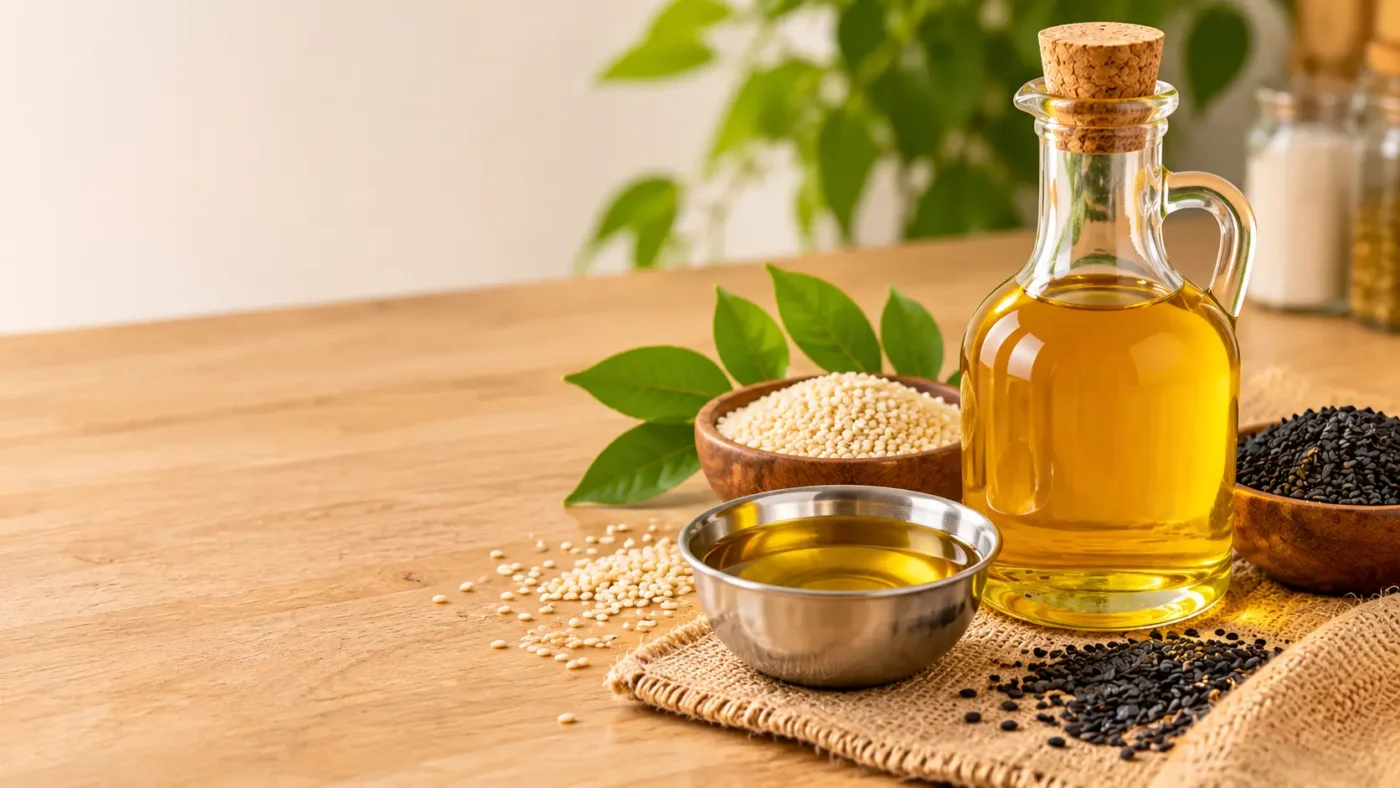
Cold pressed sesame oil (til ka tel, or gingelly oil in the south) is one of the oldest cooking oils in India. It turns up in tadkas, pickles, winter recipes and traditional massage, and it has a gentle, nutty aroma that is nothing like the sharp bite of mustard oil.
This guide explains what cold pressed sesame oil is, how it differs from toasted and refined sesame oil, how to use it in cooking and pickles, why it is a popular choice in winter kitchens, how to choose a good bottle and how to store it.
Short answer: Cold pressed sesame oil is made by pressing sesame seeds without chemical refining. It is light golden, mildly nutty and works well for tadka, shallow frying, dressings and pickles. Toasted sesame oil is darker and used mainly as a finishing oil, and refined sesame oil is milder and more neutral.
What Is Cold Pressed Sesame Oil?
Cold pressed sesame oil is oil pressed out of sesame seeds without added chemical solvents and without chemical refining afterwards. In a traditional setup, the seeds are crushed in a slow press and the oil is filtered and bottled.
Because it is not heavily processed, cold pressed sesame oil keeps the natural colour and aroma of the seed. Oil from white sesame seeds is usually light golden with a mild, nutty smell. Oil from black sesame seeds is darker with a stronger, earthier flavour.
What does “cold pressed” really mean?
It generally means the seeds were pressed without extra heat being added, and without chemical refining afterwards. Exact practices differ from one maker to another, and the words on the front of the pack are not a guarantee of purity, so the label and brand still matter.
Cold Pressed vs Toasted vs Refined Sesame Oil
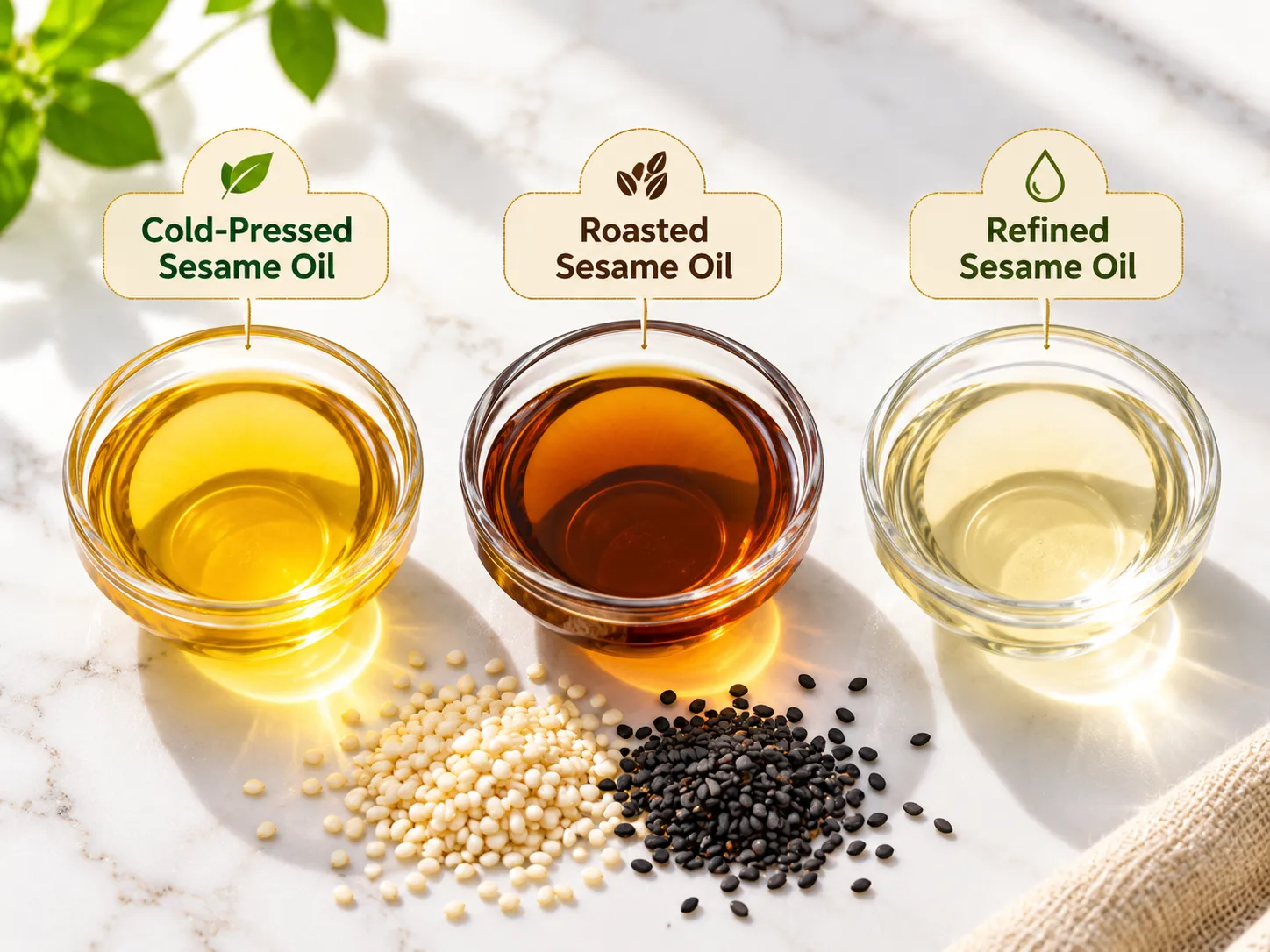
“Sesame oil” on a shelf can mean three quite different products.
Cold pressed sesame oil
- Light to medium golden
- Mild, nutty aroma
- Everyday Indian cooking, tadka, pickles, shallow frying
Toasted (roasted) sesame oil
- Dark brown, made from roasted seeds
- Strong, roasted aroma
- Used by the spoonful as a finishing oil in East Asian dishes, not for everyday frying
Refined sesame oil
- Pale and clear
- Very mild, almost neutral
- General frying where you do not want much flavour
If a recipe calls for sesame oil, check which kind it means. Using toasted sesame oil in place of cold pressed sesame oil will make a dish taste very different.
How to Use Cold Pressed Sesame Oil in Cooking
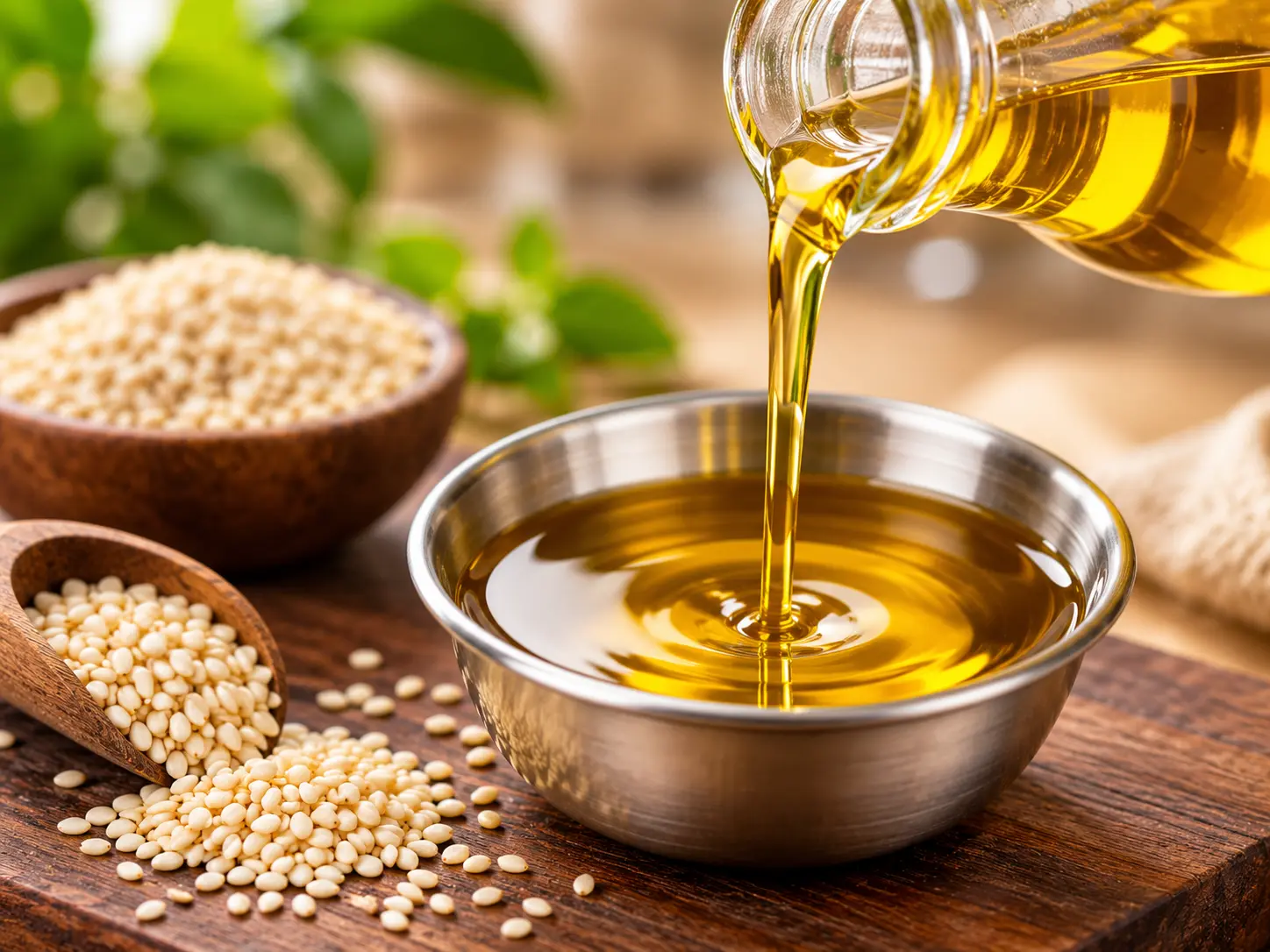
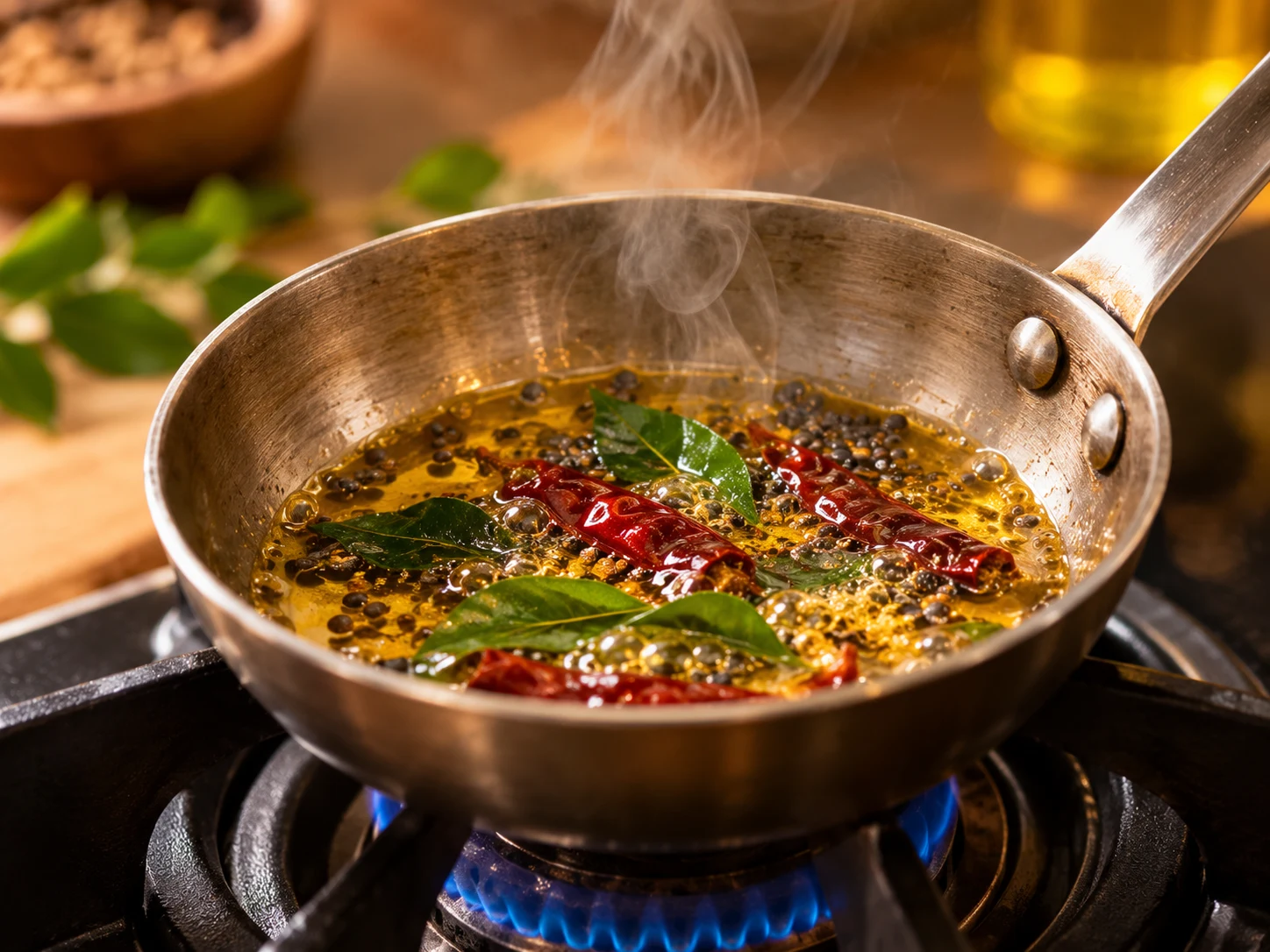
- Tadka and tempering: a spoonful of cold pressed sesame oil for mustard seeds, curry leaves and dried chillies is a classic in South Indian cooking.
- Sabzi and stir-fries: good for shallow frying and sautéing at medium heat.
- Dressings and chutneys: a little over a salad or mixed into a chutney adds a nutty note.
- Rice and poriyal-style dishes, where the oil is meant to add gentle flavour, not dominate.
A note on heat
Unrefined oils generally cope with high heat less well than refined ones. Many cooks use cold pressed sesame oil for medium-heat cooking and choose a refined oil for deep frying. Follow your recipe, and never leave hot oil unattended.
Sesame Oil in Pickles
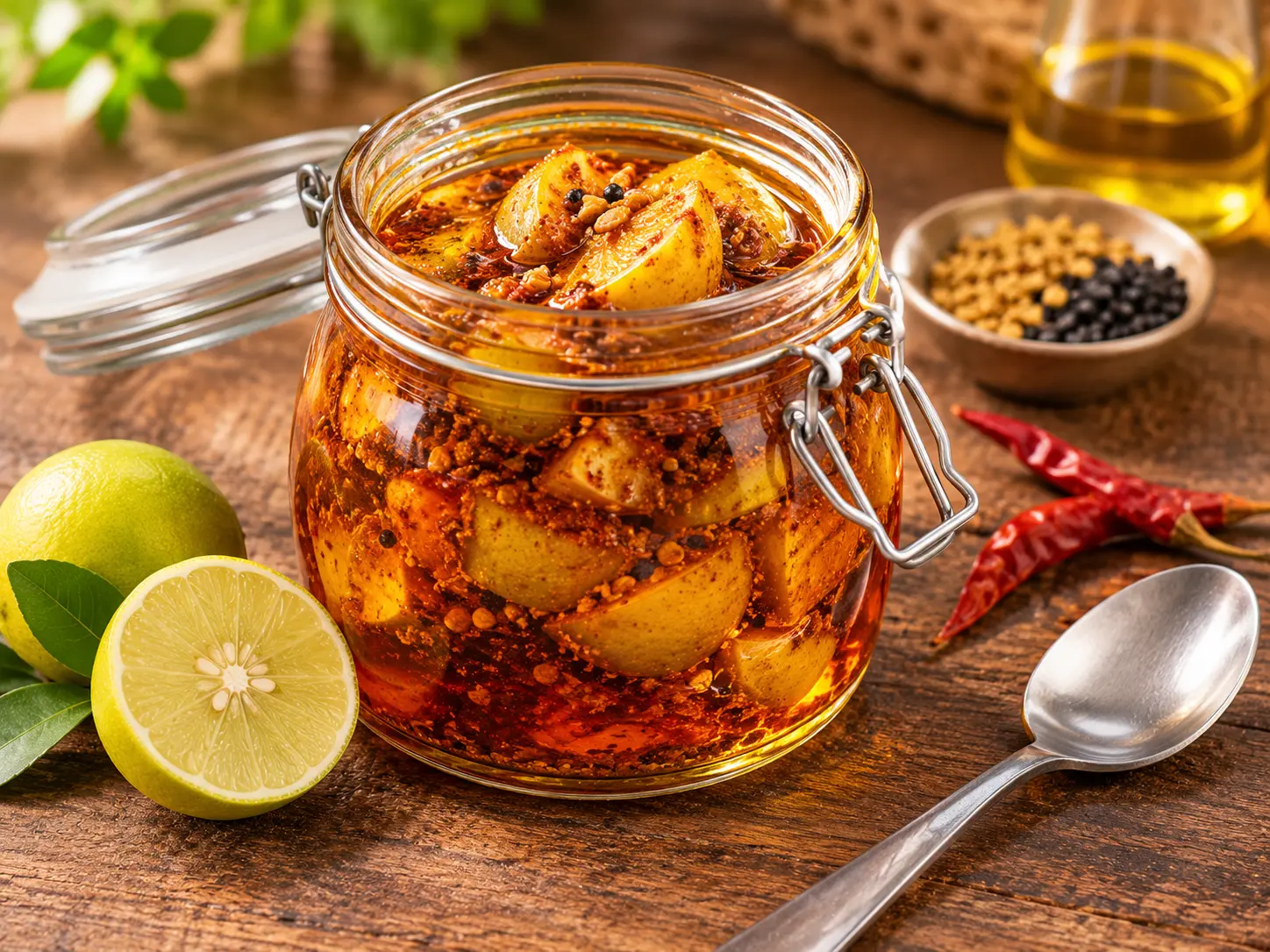
In many regions, especially in the south, gingelly oil is the traditional oil for pickles such as lime, mango and gongura. It is gentle enough to let the spices and sourness come through, and it coats the pieces well.
If you make pickles at home, use dry, clean jars and a dry spoon, and make sure the oil covers the pieces, as this is part of how a pickle keeps. Compare this with mustard oil, which gives northern pickles their sharp bite, in our guide to kachi ghani mustard oil vs refined oil.
Sesame Oil in Winter Kitchens
Sesame is a familiar winter ingredient in India. Think of til-gud laddoos, til chikki and other festival sweets around Makar Sankranti and Lohri, and of warm dishes cooked with sesame oil in many homes. In many traditional kitchens, sesame is simply seen as part of the winter food calendar.
This is a cultural habit, not a medical claim. If you have health questions about oils or your diet, talk to your doctor or a qualified dietitian.
How to Choose a Good Bottle of Cold Pressed Sesame Oil
Home checks cannot confirm purity, so the label and the seller matter most. Look for:
- Ingredient: sesame oil only, with no “blended” or “edible vegetable oil” added.
- Seed type and process: white or black sesame, and a brand that explains how the oil is pressed.
- FSSAI licence number and the manufacturer’s or packer’s name and address.
- Batch number, packing date and best-before date.
- A sealed pack with an undamaged cap. Avoid loose or unlabelled oil.
- Aroma: a fresh, mild, nutty smell. A sour, bitter or paint-like smell means the oil has gone rancid.
- Price: pressing sesame seeds yields a modest amount of oil, so a price far below the market rate deserves a second look.
Please do not use acids or other chemicals at home to “test” oil. Only a laboratory can confirm what is in an oil. India’s food regulator, the Food Safety and Standards Authority of India (FSSAI), shares consumer-awareness material on simple home checks in its DART (Detect Adulteration with Rapid Test) booklet and on its Check Adulteration at Home page. For the full checklist, see our guide to how to identify pure mustard oil at home, which applies to any cooking oil label.
How to Store Cold Pressed Sesame Oil
Keep cold pressed sesame oil in a clean, dry, tightly closed container, away from direct sunlight and heat. A dark bottle or a cool cupboard works well. Use a dry spoon, do not top up an old bottle with fresh oil, and use the oil within its best-before date. If it smells sour or bitter, discard it.
Frequently Asked Questions About Cold Pressed Sesame Oil
What is cold pressed sesame oil?
Oil pressed from sesame seeds without added chemical solvents and without chemical refining afterwards. It is usually light golden with a mild nutty aroma.
What is the difference between cold pressed and toasted sesame oil?
Toasted sesame oil is made from roasted seeds, so it is dark with a strong roasted smell and is used mainly as a finishing oil. Cold pressed sesame oil is lighter and milder and is used for everyday cooking, tadka and pickles.
Is gingelly oil the same as sesame oil?
Yes. Gingelly oil is the common name for sesame oil in southern India. Check the label to see whether it is cold pressed, toasted or refined.
Can I fry with cold pressed sesame oil?
It works well for medium-heat cooking, tadka and shallow frying. For deep frying at high heat, many cooks prefer a refined oil. Follow your recipe and take care with hot oil.
How can I tell if sesame oil is pure?
You cannot confirm purity at home. Look for a clear single-ingredient label, a traceable brand with batch and licence details, a sealed pack and a fresh, mild nutty smell. Only a laboratory can confirm purity.
How should I store cold pressed sesame oil?
In a clean, dry, tightly closed container away from sunlight and heat, and use it within the best-before date.
Choosing Cold Pressed Sesame Oil for Your Kitchen
Whatever brand you choose, look for a clear single-ingredient label, batch and date details, a sealed pack and a seller you can reach if you have a question.
Hilvera™, a consumer food brand of Upfront Enterprise from Dehradun, offers cold pressed sesame oil under its co-brand Kathait Gold, along with other everyday kitchen essentials, with a focus on quality, clear product information and practical value.
Final Thoughts
Cold pressed sesame oil is a gentle, nutty, versatile oil for everyday cooking, pickles and winter recipes. Choose it for flavour and tradition, pick toasted sesame oil only as a finishing oil, read the label carefully and store the bottle well.
This article is for general consumer awareness and is not dietary or medical advice.