

Cold-Pressed Oils Guide
Kachi Ghani Mustard Oil vs Refined Oil: What Is the Real Difference?
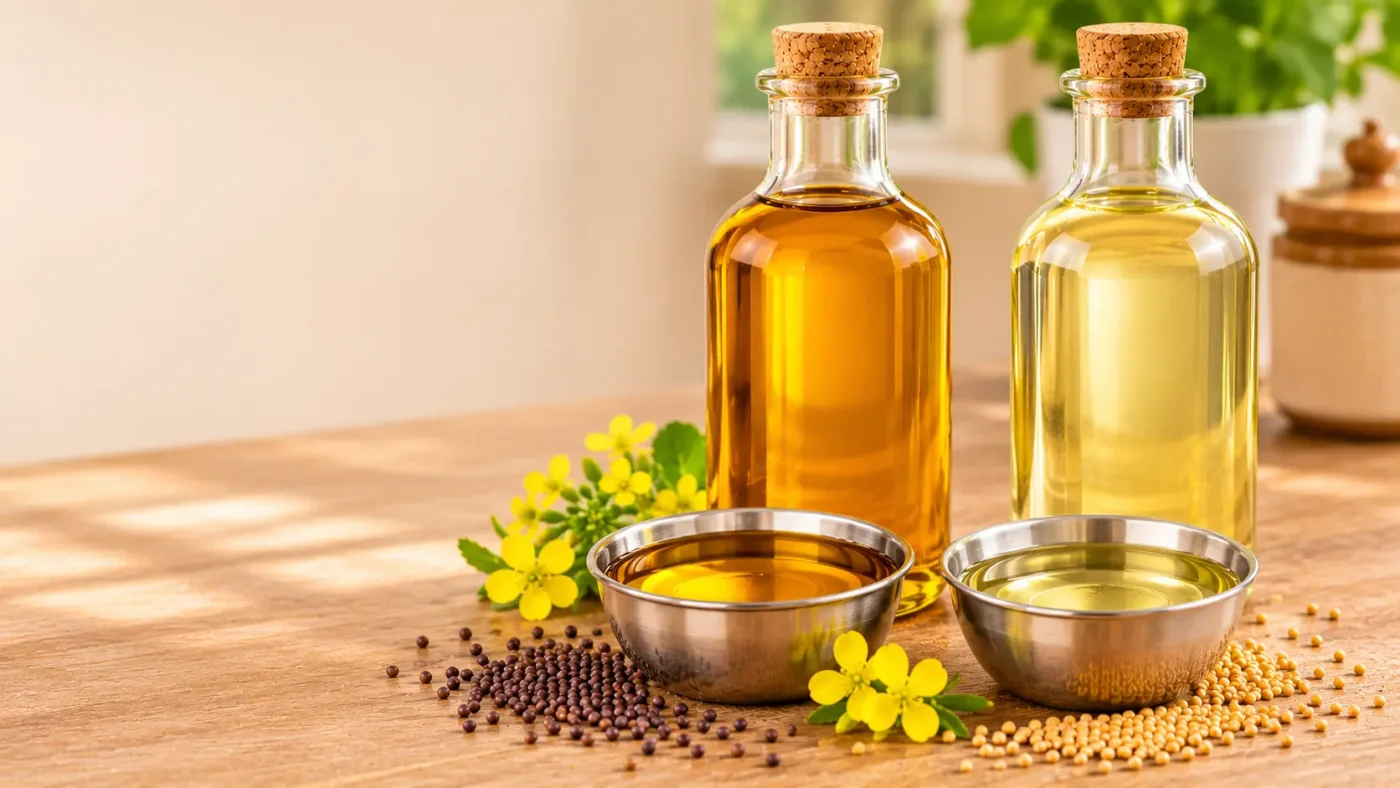
Walk into any grocery store and you will see two kinds of mustard oil on the shelf: kachi ghani mustard oil and refined mustard oil. The packs look similar, but the oil inside is made differently, smells differently and behaves differently in your pan.
So what is the real difference? This guide explains how each oil is made, how they compare on smell, colour, taste and cooking, which one suits which dish, and what to check on the label before you buy kachi ghani mustard oil or any other mustard oil.
Short answer: Kachi ghani mustard oil is pressed slowly in a traditional way and keeps the seed’s golden colour, strong smell and sharp pungency. Refined mustard oil goes through extra processing that makes it lighter, milder and more neutral. Neither word on the front of a pack guarantees purity, so always read the label.
What Is Kachi Ghani Mustard Oil?
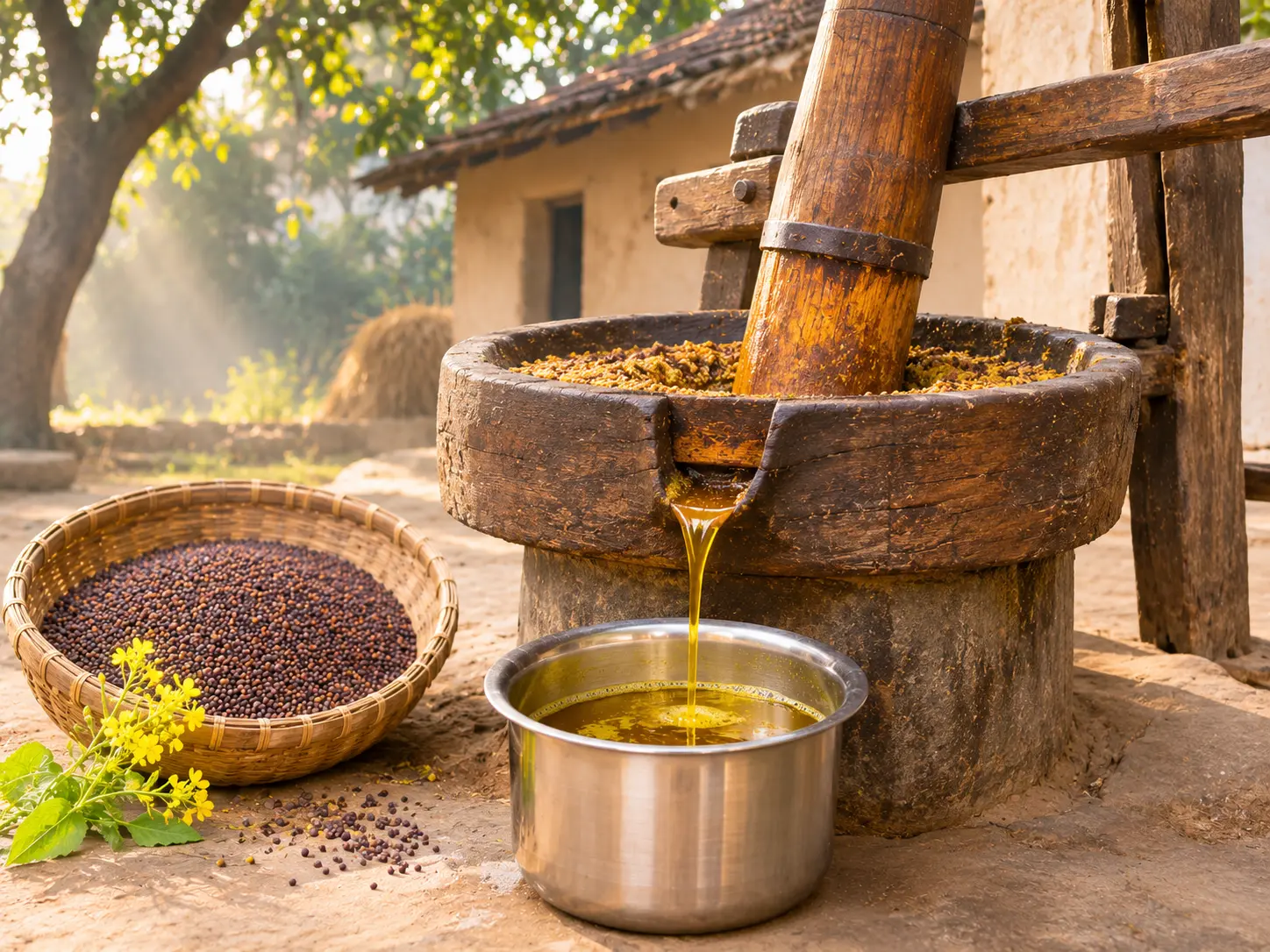
Kachi ghani mustard oil is oil pressed from mustard seeds using a slow, traditional “ghani” (press), without chemical refining afterwards. The seeds are crushed and the oil is squeezed out, then usually filtered and packed.
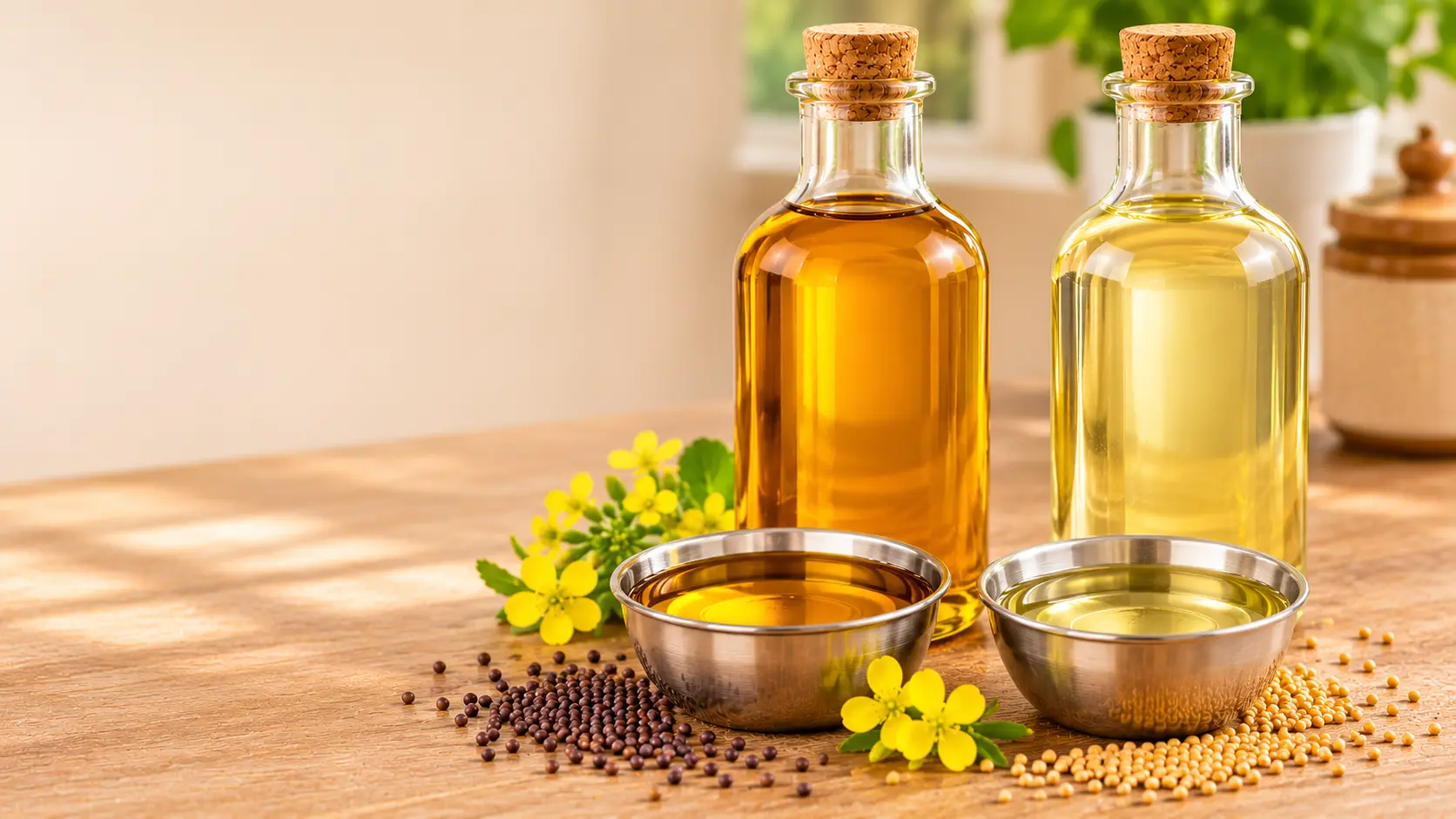
Because it is not refined, kachi ghani mustard oil keeps most of what makes mustard oil special: a deep golden to amber colour, a strong aroma, and the sharp pungency known as jhaal that you feel in your nose when you open the bottle.
Why does it smell so strong?
The pungency comes from natural compounds in mustard seeds, which develop when the seeds are crushed. Kachi ghani mustard oil keeps these compounds, so it smells and tastes sharp. That strong smell is normal and is part of the character of the oil, not a sign that something is wrong. A rancid or sour smell is different, and means the oil has gone bad.
What Is Refined Mustard Oil?
Refined mustard oil starts as pressed or extracted oil and then goes through further processing steps to remove colour, smell and some natural components. The result is a lighter, clearer oil with a mild smell and a more neutral taste.
Refined oil is not automatically unsafe, and many households use it for everyday frying because it has a mild flavour. It simply does not taste or smell like traditional mustard oil.
Kachi Ghani Mustard Oil vs Refined Oil: Side by Side
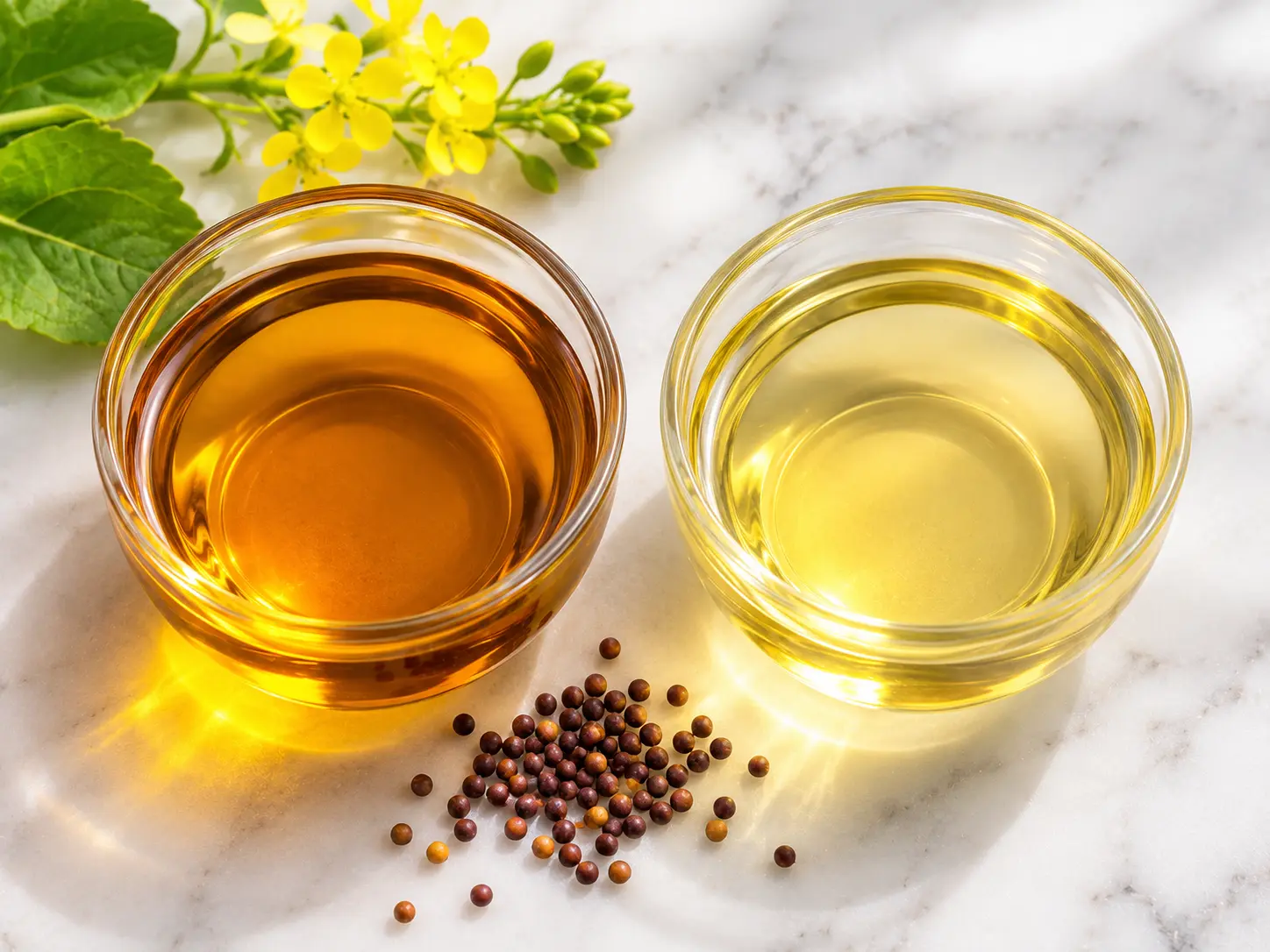
Kachi ghani mustard oil
- Process: slow traditional pressing, no chemical refining after
- Colour: deep golden to amber
- Smell and taste: strong aroma, sharp pungency
- Best for: pickles, tadka, fish and meat curries, traditional recipes, massage use as per your own tradition
- Price: usually higher
Refined mustard oil
- Process: pressed oil that is processed further
- Colour: lighter and clearer
- Smell and taste: mild and neutral
- Best for: everyday frying and dishes where you want a quiet flavour
- Price: usually lower
In general, refined oils tolerate high heat a little better than unrefined ones, while kachi ghani mustard oil brings more flavour. Which is “better” depends on what you are cooking, not on one oil being good and the other bad.
Which Oil for Which Dish?
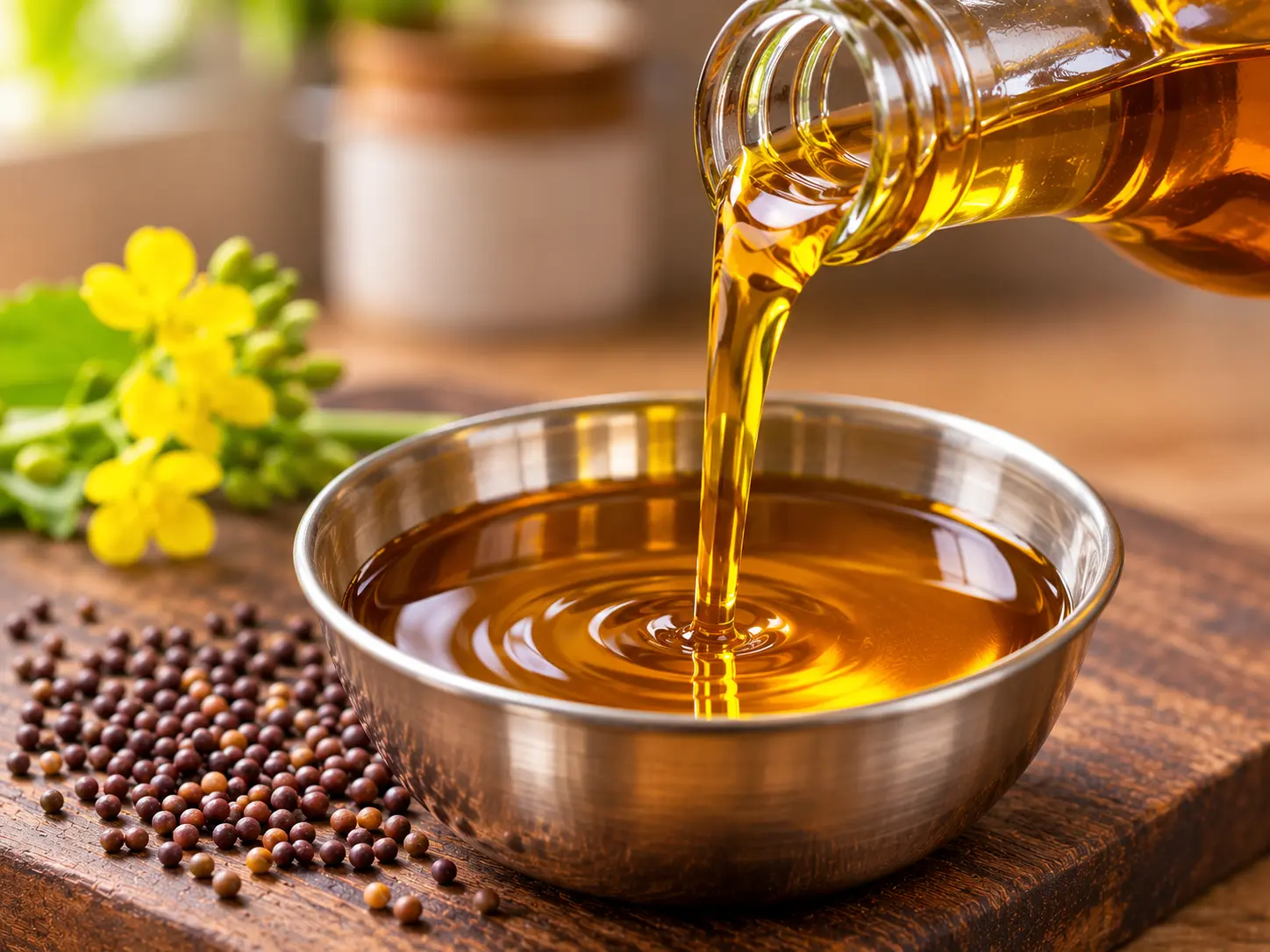
Choose kachi ghani mustard oil for
- Pickles: the pungency and body of the oil are part of the pickle.
- Tadka and sabzi: a little goes a long way for a bold flavour.
- Fish curries and traditional Bengali, Bihari and Punjabi dishes where mustard oil is the signature taste.
Choose refined oil for
- Everyday deep frying or high-heat cooking where you do not want a strong smell.
- Dishes where the oil should stay in the background, such as delicate or sweet preparations.
A common kitchen habit with raw mustard oil
Many cooks heat kachi ghani mustard oil until it just begins to smoke, then let it cool a little before adding other ingredients. This mellows the raw sharpness. Follow your own recipe and tradition, and never leave hot oil unattended.
What to Check on the Label Before You Buy

“Kachi ghani” and “cold pressed” describe how an oil is made, but they are not a guarantee of purity. The label is your best tool. Check these points:
- Ingredient: it should say mustard oil only. FSSAI has prohibited blending mustard oil with other edible oils in packs sold as mustard oil.
- FSSAI licence number and the manufacturer’s or packer’s name and address.
- Batch number, packing date and best-before date.
- A sealed pack with an undamaged cap. Avoid loose or unlabelled oil.
- A clear process description from the brand, such as how and where the oil is pressed.
- Price: traditionally pressed oil costs more to make, so a price far below the market rate deserves a second look.
Looking for a purity check? Read our guide to how to identify pure mustard oil at home.
Common Myths About Kachi Ghani and Refined Oil
Myth 1: Kachi ghani always means pure
Not necessarily. It describes the pressing method, not the purity of every bottle. Check the ingredient, licence and batch details.
Myth 2: A strong smell proves it is pure
A strong, sharp smell is a good sign for kachi ghani mustard oil, but smell alone cannot prove purity, and a sour or rancid smell means the oil has spoiled.
Myth 3: Refined oil is poison
No. Refined oil is a regular cooking oil. It simply has a different flavour and process. Choose the oil that suits your recipe, and talk to your doctor for dietary advice.
Frequently Asked Questions About Kachi Ghani Mustard Oil
What is the difference between kachi ghani mustard oil and refined mustard oil?
Kachi ghani mustard oil is pressed slowly in a traditional way and not refined afterwards, so it keeps its golden colour, strong aroma and pungency. Refined mustard oil is processed further, so it is lighter and milder.
Why is kachi ghani mustard oil so pungent?
The pungency comes from natural compounds in mustard seeds that stay in the oil when it is not heavily processed. It is normal and part of the oil’s character.
Is kachi ghani mustard oil better than refined oil?
It depends on what you are cooking. Kachi ghani mustard oil is better for pickles, tadka and traditional dishes where you want the flavour. Refined oil suits everyday frying where you want a mild taste.
Can I use kachi ghani mustard oil for frying?
Yes, many households do. Many cooks heat it until it just starts to smoke and then cool it slightly to mellow the sharpness. Follow your own recipe and be careful with hot oil.
Does “cold pressed” mean the same as kachi ghani?
The two terms are often used together. Both describe pressing the seeds without chemical refining afterwards, but neither guarantees the purity of a bottle, so check the label.
How should I store kachi ghani mustard oil?
In a clean, dry, tightly closed container, away from direct sunlight and heat. Use a dry spoon and do not top up an old bottle with fresh oil.
Choosing Kachi Ghani Mustard Oil for Your Kitchen
Whatever brand you choose, look for a clear single-ingredient label, batch and date details, a sealed pack and a seller you can reach if you have a question.
Hilvera™, a consumer food brand of Upfront Enterprise from Dehradun, offers kachi ghani black mustard oil under its co-brand Kathait Gold, along with other everyday kitchen essentials, with a focus on quality, clear product information and practical value.
Final Thoughts
Kachi ghani mustard oil and refined oil are two different products for two different jobs. Pick kachi ghani mustard oil when you want strong flavour and tradition, pick refined oil when you want a mild, neutral oil, and read the label either way.
This article is for general consumer awareness and is not a laboratory method, dietary or medical advice.