


Indian Atta Guide: Types, Uses & Buying Tips
In an Indian kitchen, no pantry staple carries greater daily responsibility than whole wheat atta. From the puff of morning phulkas to evening parathas, the texture, softness, and nutritional value of your family’s meals depend entirely on the grain selected and how it was milled. Complete indian atta guide
Yet, with hundreds of packaged supermarket options claiming to be “100% whole grain” or “traditional chakki fresh,” choosing genuine whole wheat flour has become confusing. This comprehensive guide covers wheat grain varieties, milling technologies, grain anatomy, roti-making science, and practical tips for selecting unadulterated flour.
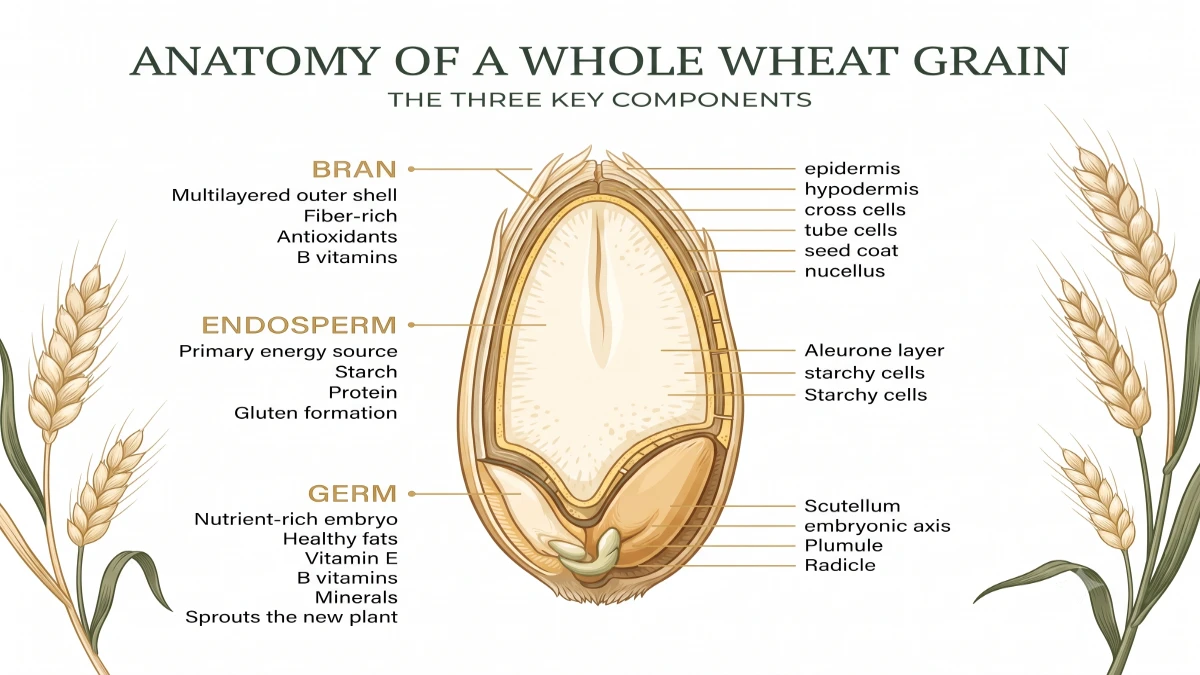
Anatomy of a Whole Wheat Kernel
Chakki Fresh Atta preserves all 3 layers; Maida contains only the starchy Endosperm.
1. The Anatomy of Wheat: What Makes Genuine Atta?
True whole wheat flour (Triticum aestivum) requires grinding the entire wheat kernel without extracting any part of it. A wheat grain consists of three distinct anatomical layers:
- The Bran (Approx. 14%): The protective, fibrous multi-layered outer shell rich in insoluble dietary fiber, B-complex vitamins, and essential minerals like iron, zinc, and magnesium.
- The Endosperm (Approx. 83%): The starchy middle section containing complex carbohydrates and gluten-forming proteins (gliadin and glutenin).
- The Germ (Approx. 3%): The nutrient-dense living embryo packed with natural vitamin E (tocopherols), unsaturated fatty acids, and phytonutrients.
When all three layers are ground together, you get 100% Whole Wheat Atta. When the bran and germ are extracted, leaving only the starchy endosperm, the resulting product is Maida (refined white flour).
2. Common Indian Wheat Varieties Explained
The quality and behavior of your flour begin in the soil. The primary wheat varieties cultivated in India include:
| Wheat Variety | Primary Growing Regions | Characteristics & Culinary Best Use |
|---|---|---|
| Sharbati Wheat | Sehore, Vidisha (Madhya Pradesh) | Golden grains with high natural sweetness and high moisture absorption. Ideal for exceptionally soft rotis and phulkas. |
| Lokwan Wheat | Maharashtra, Gujarat, Rajasthan | Slightly harder, amber-colored grain with strong gluten strength. Excellent for everyday chapatis, parathas, and poori dough. |
| Durum (Kathia / Malvi) | Central and Western India | Very hard, high-protein grain traditionally ground into coarse semolina (sooji/rava) and daliya. |
| Khapli (Emmer Wheat) | Maharashtra, Karnataka | Ancient grain with a lower glycemic index and weaker gluten structure. Requires warm water for kneading; popular for diabetic diets. |
3. How Wheat Is Milled: Stone Chakki vs. Stoneless Pulverizer vs. Roller Mill
The method used to grind wheat into flour determines its nutritional integrity, hygiene, and cooking performance:
Industrial Roller Mills
High-capacity commercial mills utilize high-speed steel corrugated rollers that shear the grain into separate fractions. The bran and germ are extracted. To label the end-product as “whole wheat,” some manufacturers blend white starch with coarse bran flakes, while omitting the perishable germ oil to extend warehouse shelf-life to 9-12 months. This results in dry flour that makes stiff rotis.
Conventional Stone Chakkis
Traditional twin-stone mills grind whole grains together. While culturally familiar, stone chakkis generate heavy frictional heat during prolonged operation, which can degrade heat-sensitive B vitamins. Additionally, friction between grooved stones can shed microscopic stone dust (silica grit) into the flour over time.
Modern Enclosed Stoneless Pulverizers
Modern food engineering has developed enclosed, stoneless pulverizer milling. Operating at regulated low temperatures without friction stones, this method completely eliminates stone-grit contamination. It pulverizes the bran, endosperm, and living wheat germ together uniformly, ensuring maximum water absorption and vitamin retention without chemical dough softeners.
4. The Science of Soft Rotis: Why Wheat Germ Matters
Many home cooks wonder why their rotis dry out within an hour of cooking or turn leathery in lunch tiffins. The secret lies in moisture retention:
- Natural Grain Oils: The natural lipids inside the wheat germ act as nature’s dough conditioner. When the germ is retained in the flour, the dough traps moisture naturally during cooking.
- Water Absorption Rate: Whole grain flour with intact bran absorbs water gradually over 10 to 15 minutes of resting. Resting the dough allows the gluten proteins (gliadin for extensibility, glutenin for elasticity) to hydrate properly, allowing the roti to puff up on the tawa and stay soft for hours.
5. How to Check Atta Quality: Consumer Buying Checklist
Use these straightforward criteria when choosing flour for your home:
- Check Color and Texture: Pure whole wheat flour has a warm golden-tan or cream hue with visible specks of bran. Avoid flour that looks stark white or feels like chalky talcum powder.
- Inspect the Ingredient Label: The ingredient list should state strictly 100% Whole Wheat. Avoid packages listing “Wheat Flour” (a common industry term for maida blends) or chemical additives like potassium bromate, benzoyl peroxide, or INS 920.
- Look for Fresh Milling Dates: Because genuine whole wheat contains natural germ oils, it is best consumed within 30 to 60 days of milling. Choose locally milled flours over national brands that require months of preservatives for long-haul transport.
6. How to Store Whole Wheat Atta at Home
Because unadulterated flour contains zero chemical fumigants or anti-caking agents, proper kitchen storage is essential:
- Airtight Food-Grade Containers: Transfer flour immediately from paper or plastic bags into an airtight food-grade stainless steel or glass drum.
- Keep Moisture Away: Never insert wet measuring cups or spoons into the flour bin, as excess moisture causes clumping and attracts grain pests.
- Cool, Dark Pantry: Store away from direct sunlight, stove heat, and humid corners. In hot monsoon months, storing flour in smaller airtight batches keeps it fresh.
7. Fresh Milling at Hilvera™ (Nathuawala, Dehradun)
At Hilvera™, our whole wheat atta is milled with a focus on purity and freshness. Milled and packed at our dedicated unit in Nathuawala, Dehradun under FSSAI Lic. No. 12625005000533, we use enclosed stoneless pulverizer technology to grind clean, graded whole wheat grain with 100% intact bran and germ.
To learn more about building a complete, unadulterated kitchen, read our cornerstone resource: The Definitive Guide to Pure Kitchen Staples.
Taste the Difference of Freshly Milled Whole Wheat
Order Hilvera Chakki Fresh Atta (5 kg)—milled fresh in Dehradun with zero maida and 100% wheat germ retention.
Frequently Ask Question
What is the difference between Sharbati atta and regular wheat atta?
Sharbati wheat, grown primarily in Madhya Pradesh’s rain-fed soils, is naturally sweeter with a higher water-absorption capacity. Rotis prepared from Sharbati atta stay noticeably softer for longer compared to standard commercial wheat blends.
Why is stoneless pulverizer milling superior to stone chakki milling?
Stoneless pulverizers grind grain inside an enclosed chamber at regulated lower temperatures without friction stones. This prevents the degradation of heat-sensitive vitamins and completely eliminates microscopic stone-grit contamination, while keeping 100% of the fibrous bran and living wheat germ intact.
What does “Wheat Flour” mean on a packaged food label in India?
Under Indian food labeling, the term “Whole Wheat Flour” or “Atta” refers to flour containing all parts of the grain. If a package simply lists “Wheat Flour” or “Refined Wheat Flour”, it often refers to maida or flour stripped of bran and germ. Always look for “100% Whole Wheat Atta” on the label.
How long does unadulterated whole wheat atta stay fresh?
Because genuine whole wheat atta retains the natural lipids and oils of the wheat germ, it does not contain synthetic preservatives. It is best stored in an airtight container in a cool, dry place and consumed within 30 to 60 days of milling for maximum freshness and aroma.