


Atta & Flours Guide
Why Does Roti Become Hard? The Science & 5 Steps to Make Soft Rotis
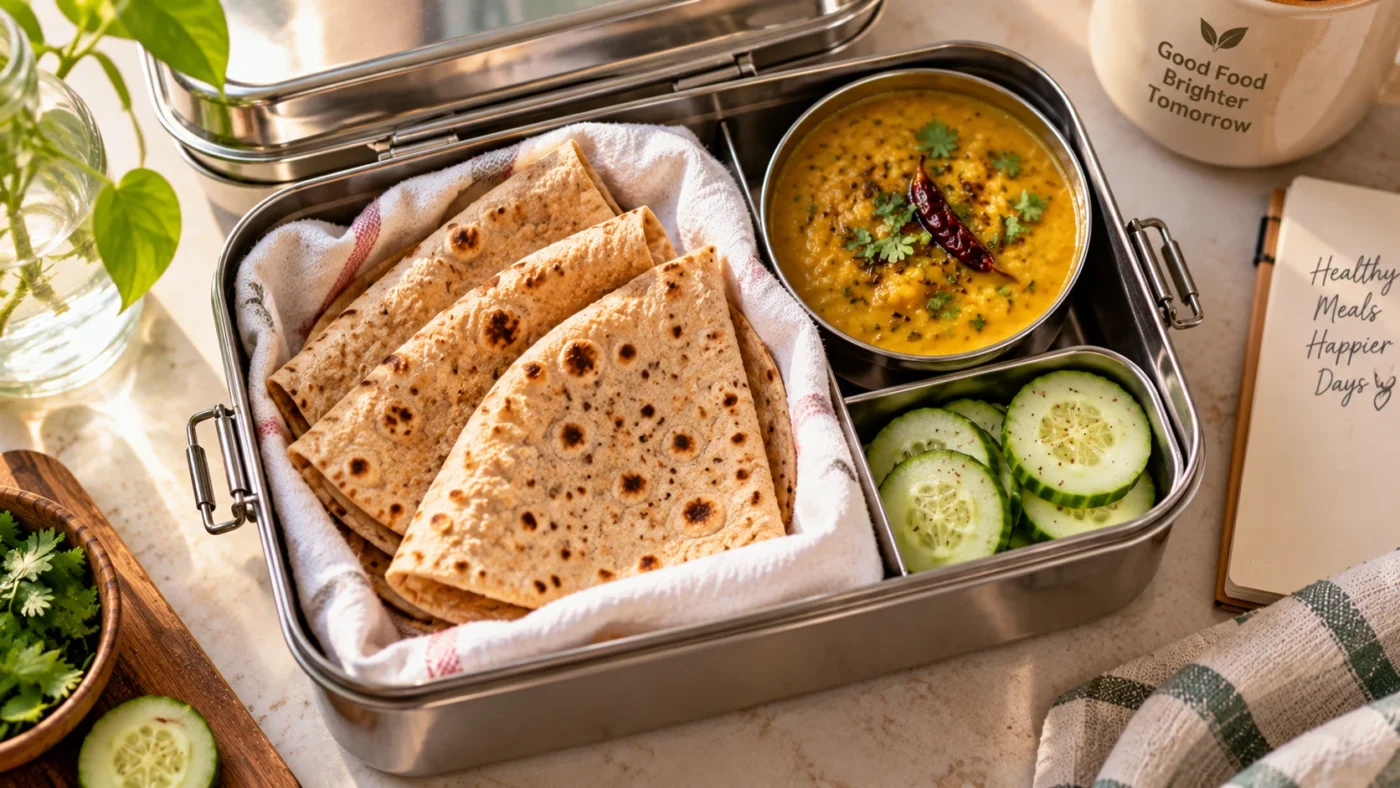
Key Highlights: Why does Roti Become Hard & How to Fix It
- Hydration is Key: Whole wheat bran absorbs water slowly; knead with lukewarm water until soft and supple.
- Rest Your Dough: Always rest kneaded dough under a damp cloth for 15–20 minutes to relax gluten strands.
- Cook on Medium-High Heat: Low heat dries rotis out; medium-high heat creates the steam needed for balloon puffing.
- Cotton Cloth Wrapping: Wrap warm rotis in a clean cotton napkin before placing in an insulated box to prevent sogginess.
- Stoneless Whole Wheat Atta: Choose cool-milled flours like Hilvera Atta for higher natural moisture retention.
The Mystery of the Hard Roti: Food Science in the Indian Kitchen
Few things in Indian culinary life are more satisfying than a balloon-puffed, golden phulka that melts in your mouth. Yet, almost every home cook has experienced the quiet frustration of preparing chapatis that puff beautifully on the tawa, only to turn brittle, leathery, or cardboard-hard within two hours inside an office tiffin or school lunchbox.
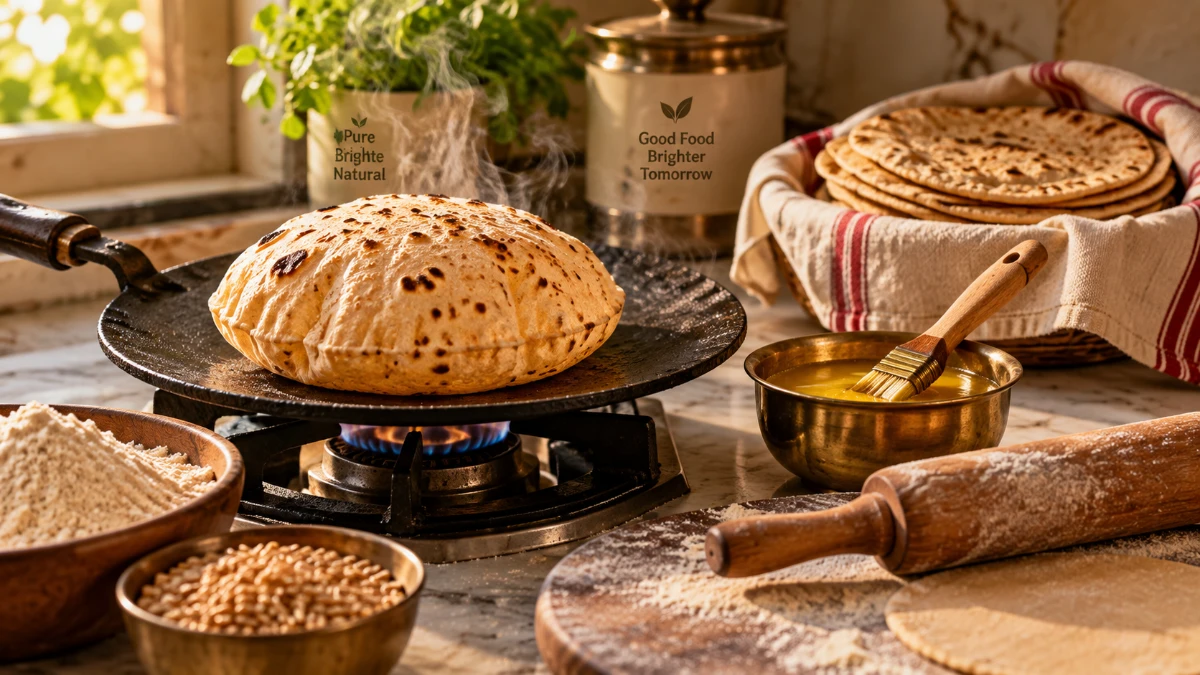
When chapatis turn hard, most people immediately blame their cooking technique or assume they bought a bad batch of flour. In reality, making soft rotis that stay tender for 6 to 8 hours is not a matter of luck – it is an exact balance of dough hydration, gluten relaxation, and proper milling technology.
In this comprehensive food science guide, we break down the physiological reasons why chapatis dry out, examine how milling temperatures affect flour starch, and share five practical kitchen techniques to guarantee soft, pillowy rotis every single day.
Why Does Roti Become Hard? The 6 Common Culprits
When whole wheat flour is kneaded with water, two primary proteins – gliadin and glutenin – combine to form an elastic gluten network that traps moisture and air. If anything disrupts this moisture-protein balance, water evaporates prematurely, leaving behind a dense, brittle crust:
1. Insufficient Water During Kneading (Under-Hydration)
Whole wheat flour contains natural bran particles. Bran is hydrophilic, meaning it drinks up water slowly like a sponge. If you add water too quickly or stop kneading while the dough feels stiff, the bran continues pulling moisture away from the gluten network as the dough sits. When cooked, there is not enough trapped steam to keep the crumb tender.
2. Skipping the 15-to-20 Minute Dough Resting Period
Rolling dough immediately after kneading is the single most common reason rotis turn rubbery. Freshly kneaded gluten strands are tense and contracted. Giving your dough a 15 to 20-minute rest under a damp cloth allows the gluten matrix to relax and gives the coarse bran flakes time to fully hydrate, resulting in effortless rolling and a tender crumb.
3. Over-Dusting with Dry Flour (Excess Palethan)
Using too much dry flour while rolling out your rotis creates a thin chalky layer on the surface. When placed on a searing hot tawa, this dry flour burns into a brittle, dehydrating skin that robs the roti of surface moisture.
4. Cooking on Low Heat (The Dehydration Trap)
Many cooks lower the flame out of fear of scorching the roti. Cooking on low heat is counterproductive: instead of rapidly converting internal moisture into steam to puff the roti, low heat bakes the moisture out slowly like a biscuit, resulting in a dry, papery disc.
5. High-Heat Scorched Flour from Traditional Stone Chakkis
If your wheat flour was milled in an old-style stone chakki with high friction heat (often exceeding 75°C), the heat can prematurely denature delicate wheat proteins and damage starch granules before you even add water. Scorched flour has a compromised hydration capacity, making it nearly impossible to produce long-lasting soft rotis.
6. Improper Lunchbox Storage
Placing hot rotis directly into an airtight plastic container traps hot steam against the cool plastic lid. The steam condenses into water droplets, making the bottom roti soggy while the top roti dries out and turns hard.
Troubleshooting Roti Texture: What Goes Wrong vs. The Fix
Quick diagnostics to identify why your flatbreads are not performing as expected:
| Roti Problem | Scientific Root Cause | The Kitchen Solution |
|---|---|---|
| Hard & Brittle after 1 Hour | Dough was under-hydrated; cooked on low flame too long | Knead with lukewarm water; cook on medium-high heat |
| Rubbery & Chewy Texture | Gluten network did not relax; rolling too fast | Rest the dough under a damp cloth for 20 minutes before rolling |
| Pale, Biscuit-like Crust | Excess dry dusting flour (palethan) burned on tawa | Dust lightly; gently tap the rolled roti between hands to shake off excess dry flour |
| Roti Does Not Puff Up | Uneven rolling thickness; edges pressed too thin or torn | Roll with uniform circular pressure from center to edge without tearing |
| Soggy Bottom in Tiffin | Trapped steam condensation inside airtight containers | Wrap in clean muslin cloth before placing inside an insulated casserole |
The 5 Golden Steps to Make Soft Rotis with Whole Wheat Atta
Follow this time-tested method to achieve tender, cloud-like phulkas that stay fresh from early morning packing until evening dinner:
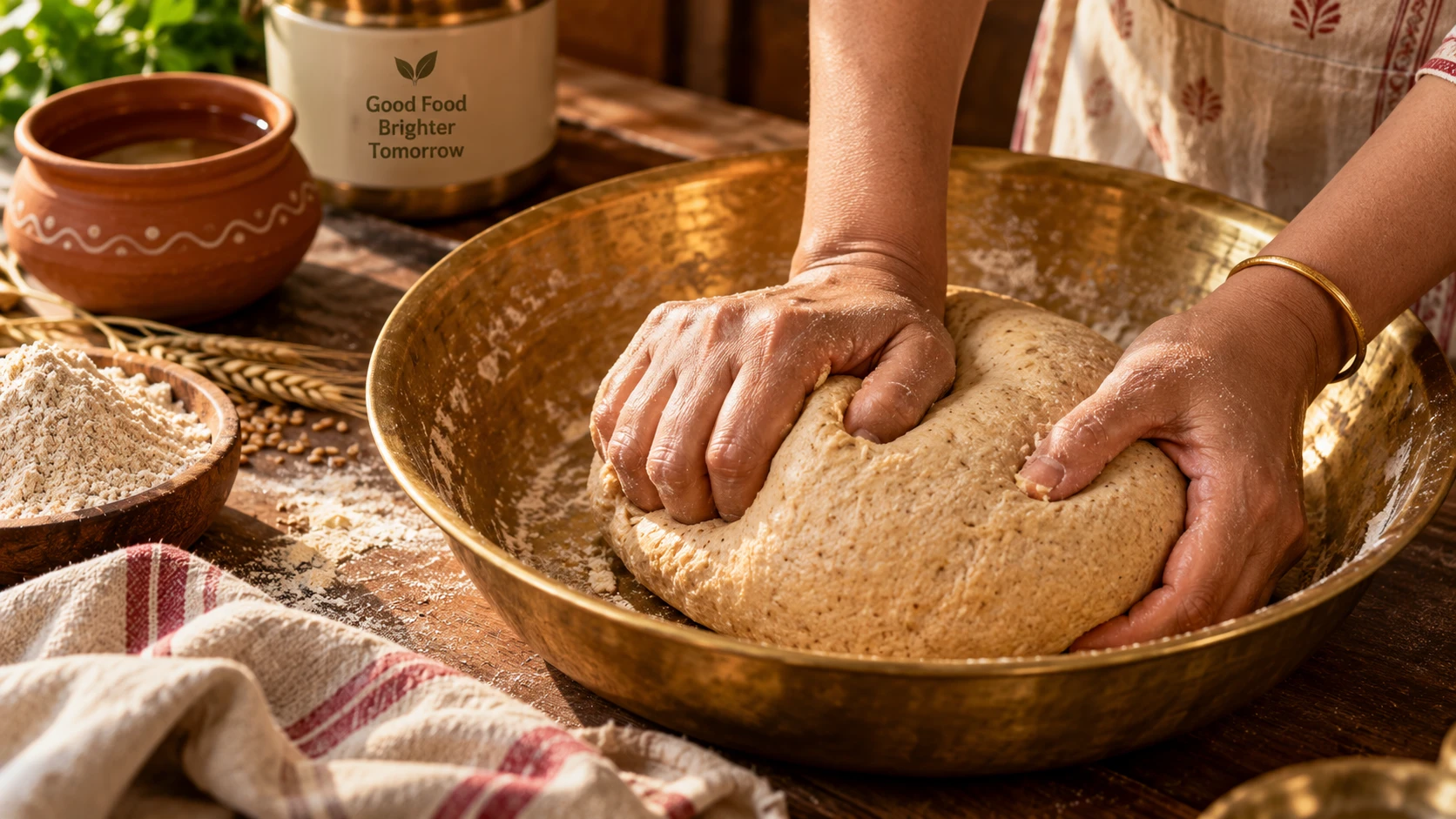
- Choose High-Protein, Naturally Sweet Wheat: Soft rotis start with superior grain. Flours ground from Madhya Pradesh wheat – such as Hilvera MP Sharbati Atta – are naturally sweeter, heavier, and contain stronger gluten strands that trap moisture effectively.
- Knead with Lukewarm Water: Use lukewarm water (around 35°C to 40°C) rather than cold tap water. Warm water activates wheat amylase enzymes, hydrates dry bran particles faster, and makes the dough supple with less kneading time.
- The 20-Minute Damp Cloth Rest: After kneading for 4 to 5 minutes until soft and elastic, coat the dough ball with a drop of cold-pressed oil or ghee. Cover with a damp cotton cloth and let it rest undisturbed for 15 to 20 minutes.
- Roll with Even, Gentle Pressure: Divide into equal smooth balls without cracks. Dust very lightly with dry flour. Roll with gentle, outward strokes, allowing the roti to rotate naturally into a circular disc of uniform thickness.
-
Master the 3-Flip Tawa Technique:
- Place roti on a well-heated, medium-hot tawa.
- First Flip (15–20 seconds): When tiny bubbles appear on the surface, flip immediately. Do not wait for brown spots yet.
- Second Flip (30–40 seconds): Cook the second side until light brown specks form across the surface.
- The Puff: Transfer directly onto a medium-high flame with tongs (or press gently with a clean cloth on the tawa). The trapped steam will instantly puff the roti like a balloon.
Pro-Tip for Tiffin Rotis: Lightly brush the hot puffed phulka with pure desi ghee on one side while warm. The fat forms a protective barrier that prevents moisture from escaping into the surrounding air, keeping the roti soft for over 8 hours.
How to Pack Rotis for School & Office Lunchboxes
Even a perfectly cooked roti can turn rubbery if packed incorrectly. Follow these simple packaging guidelines:
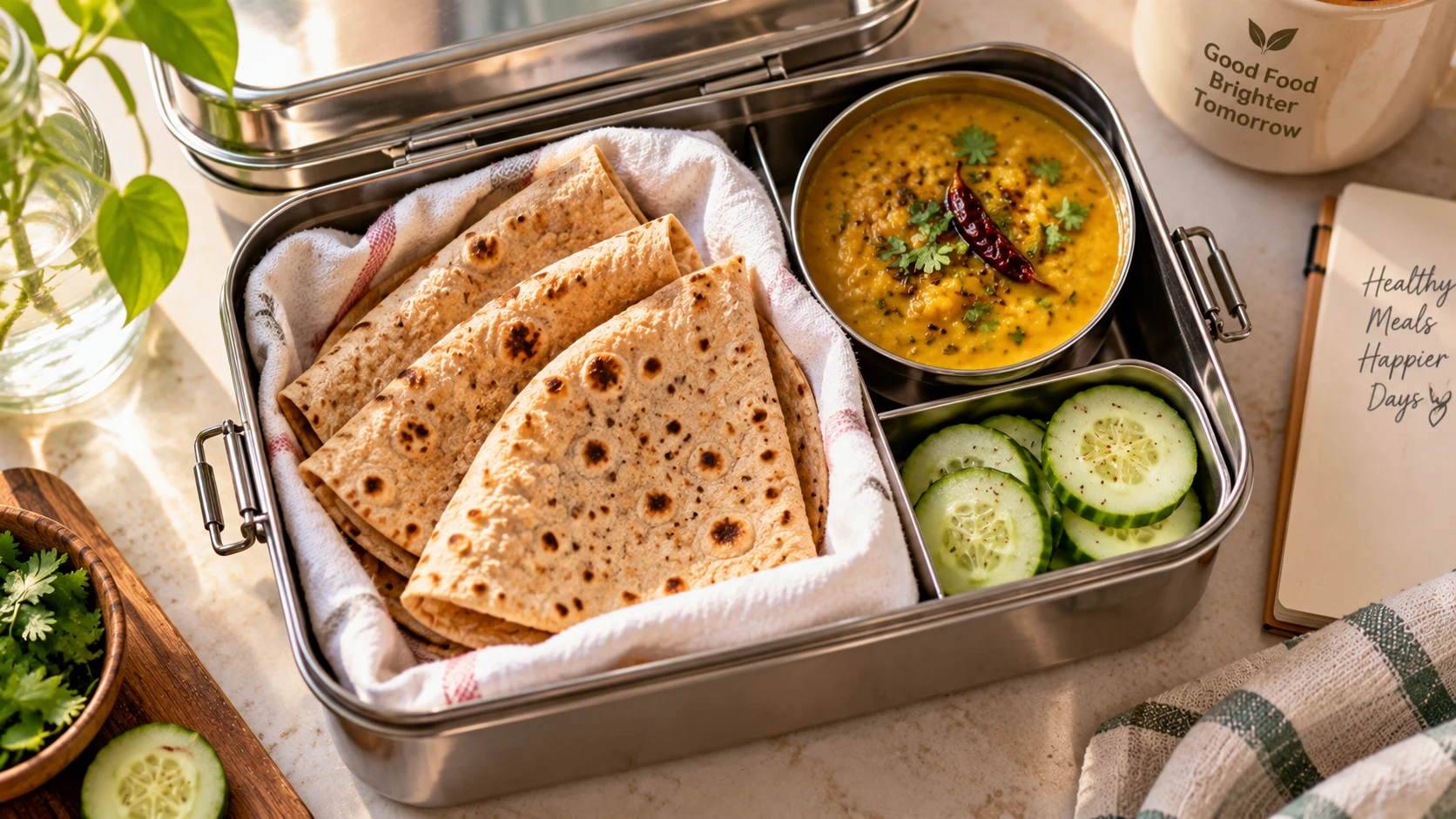
- Let the Initial Steam Escape: Place freshly puffed rotis on a clean cooling rack or plate for 30 to 45 seconds before wrapping.
- Wrap in Pure Cotton Fabric: Wrap rotis in a clean cotton napkin or muslin cloth rather than sealing directly in foil or plastic wrap. Cotton absorbs excess steam while preventing dry air from reaching the surface.
- Use an Insulated Stainless Steel Casserole: If eating at home later, store wrapped rotis inside an insulated stainless-steel roti box.
Why Milling Technology Determines Roti Softness
You can follow every cooking technique perfectly, but if your flour has been stripped of bran or damaged by milling friction, your rotis will still turn hard.
At Upfront Enterprise in Nathuawala, Dehradun, we process whole wheat using modern Air-Cooled Stoneless Pulverizers:
- Cool Operating Temperatures (<45°C): Protects natural wheat proteins from thermal scorching, ensuring optimal water absorption during kneading.
- 100% Whole Grain Retention: We preserve 100% of the fiber-rich bran and nutrient-dense germ with zero maida or chemical bleaching agents.
- Zero Stone Dust: Enclosed impact pulverization guarantees that your family never consumes abrasive stone dust or silica grit.
Explore our whole-grain milling range: Hilvera Chakki Fresh Atta | Hilvera MP Sharbati Atta | Chakki Fresh Atta Dehradun Guide.
Upfront Enterprise (Home of Hilvera™ & Kathait Gold™)Manufacturing Facility: Ward No. 100, Gujronwali Road, Shree Krishna Vihar, Nathuawala, Dehradun, Uttarakhand – 248008
Corporate Office: 58, Ring Road, Jagriti Vihar, Danda Dharampur, Upper Nathanpur, Dehradun, Uttarakhand – 248014
Helpline / WhatsApp: +91 93899 23509 | Email: info@hilvera.in
Summary Verdict
Soft, pillowy rotis that stay tender all day are not an accident – they are the natural result of clean whole wheat flour, proper water hydration, and respectful cooking temperatures. By pairing 100% unadulterated whole wheat atta with a 20-minute dough rest and medium-high tawa heat, you can say goodbye to hard, leathery chapatis forever.
Why Does Roti Become Hard FAQ
Why do my rotis turn hard like cardboard after a few hours in a lunchbox?
Rotis turn hard primarily because the dough lacked sufficient water, was rolled with too much dry dusting flour, or was cooked on low heat, which slowly bakes out internal moisture. To keep rotis soft in lunchboxes, knead with lukewarm water, let the dough rest for 20 minutes, cook on medium-high heat, and wrap the rotis in a cotton cloth inside an insulated tiffin.
How much water should I add when kneading whole wheat atta?
A good starting ratio is approximately 1 cup of water for every 2 cups of whole wheat flour. Add water gradually in three stages while kneading, as whole-grain bran absorbs water slowly. The final dough should feel soft, pliable, and non-sticky.
Why is resting the dough for 15 to 20 minutes necessary?
Resting allows the natural bran particles to absorb moisture completely and relaxes the tight gluten strands formed during kneading. Skipping this rest leaves the dough stiff, making it tear while rolling and resulting in chewy, rubbery rotis.
Does milk or warm oil make rotis softer?
Adding a teaspoon of ghee, cold-pressed oil, or substituting a portion of water with warm milk coats gluten strands and slows down starch retrogradation (the process that makes bread stale), helping rotis stay exceptionally soft for 8 to 12 hours.
How does the type of wheat flour affect roti softness?
Wheat varieties grown in fertile black soil, such as MP Sharbati wheat, have higher natural simple sugars, higher protein, and superior water absorption, naturally yielding sweeter and softer rotis compared to lower-grade commercial flours blended with maida.