

Uncategorized
How to Identify Pure Mustard Oil at Home: Kachi Ghani vs Refined
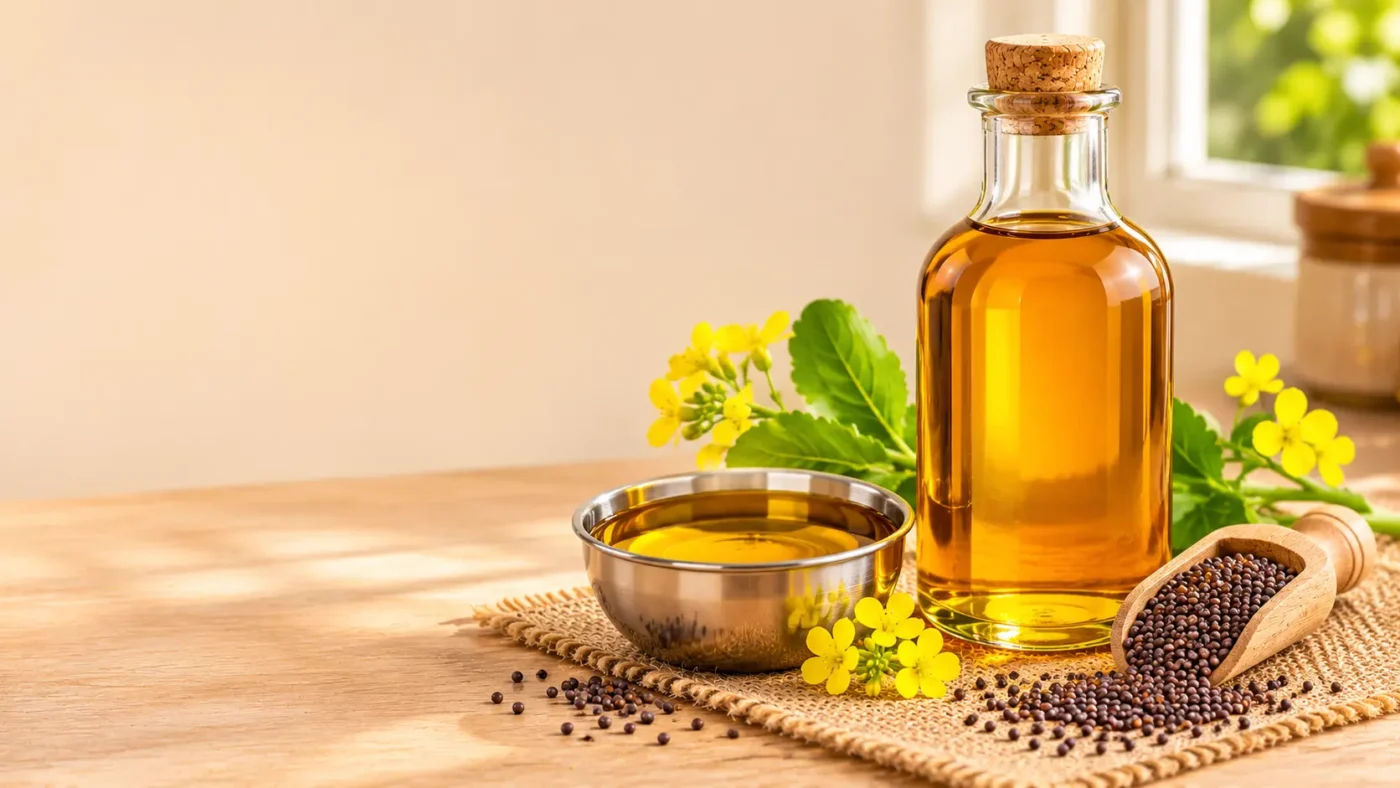
How do you know you are buying pure mustard oil? In many Indian kitchens, mustard oil (sarson ka tel) is used for tadka, pickles, frying and massage. It is also one of the oils people worry about most, because the market has refined oils, blended oils and “kachi ghani” oils, and the labels can be confusing.
This guide explains what pure mustard oil is, what kachi ghani really means, the simple checks you can do at home, what those checks cannot tell you, and how to read a label before you buy.
Short answer: You can get a good idea of pure mustard oil from its sharp pungent aroma, its colour, a clear single-oil label and a traceable brand. But home checks cannot confirm purity. Adulterants can only be reliably found in a laboratory, so never use acids or chemicals at home.
What Is Pure Mustard Oil?
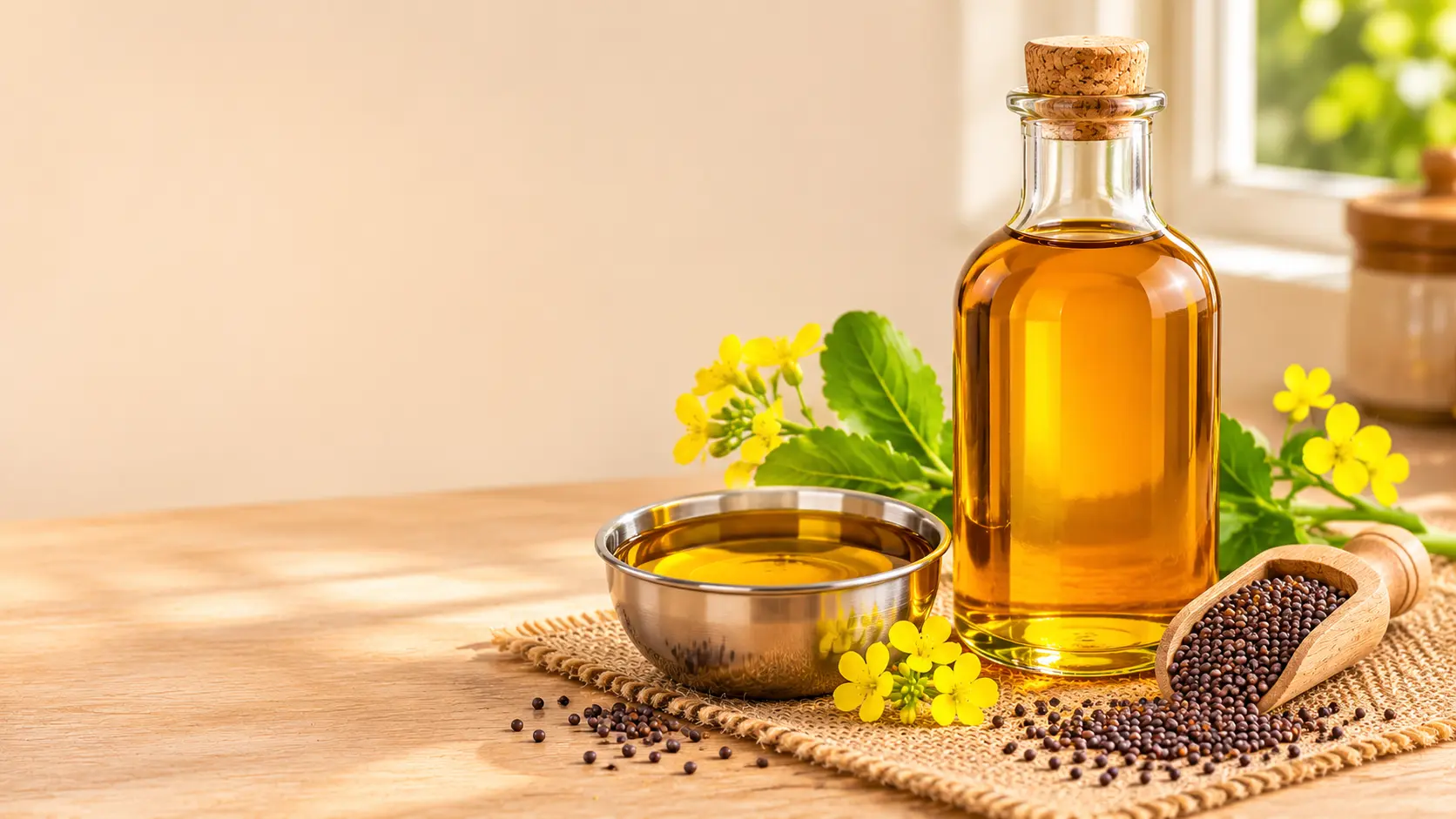
Pure mustard oil is oil extracted only from mustard seeds, with nothing else mixed in. A pack of pure mustard oil should list mustard oil as the only ingredient. FSSAI has prohibited blending mustard oil with other edible oils in packs sold as mustard oil, so a legitimate pack should not be a blend.
Pure mustard oil has a strong, sharp aroma and a pungent bite, often called jhaal. That pungency is a natural feature of the seed, and it is the first thing many people notice.
Why do people worry about mustard oil purity?
Because oil is easy to dilute with cheaper oils, and because mustard oil has a history of serious adulteration problems in India, including the toxic argemone oil, which has caused illness in past outbreaks. Today’s rules are stricter, but a careful buyer still reads the label and buys from a traceable source.
Kachi Ghani vs Refined Mustard Oil
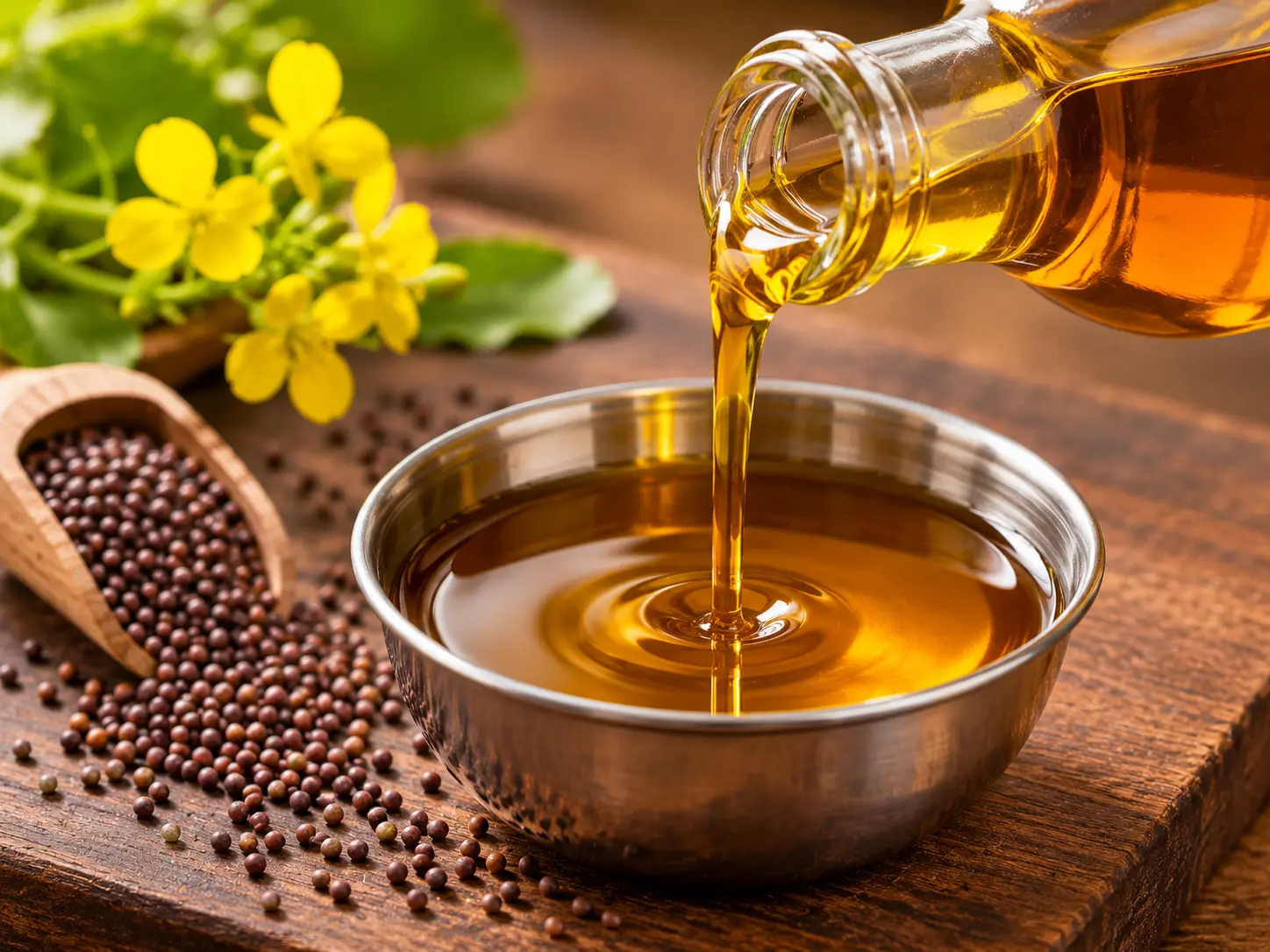
Kachi ghani mustard oil generally refers to oil pressed from mustard seeds using a slow, traditional press, without chemical refining. It usually keeps the natural colour, aroma and pungency of the seed.
Refined mustard oil goes through extra processing steps that make it lighter in colour and milder in smell. It is not necessarily unsafe, but it will not smell or taste like traditional kachi ghani oil.
Kachi ghani mustard oil
- Deep golden to amber colour
- Strong aroma and sharp pungency
- Traditional slow pressing, no chemical refining
Refined mustard oil
- Lighter, clearer colour
- Mild smell and flavour
- Extra processing steps after pressing
Neither is a guarantee of purity. “Kachi ghani” on the front of a pack is a description of the process, so the ingredient list, licence and batch details still matter.
Simple Home Checks for Pure Mustard Oil
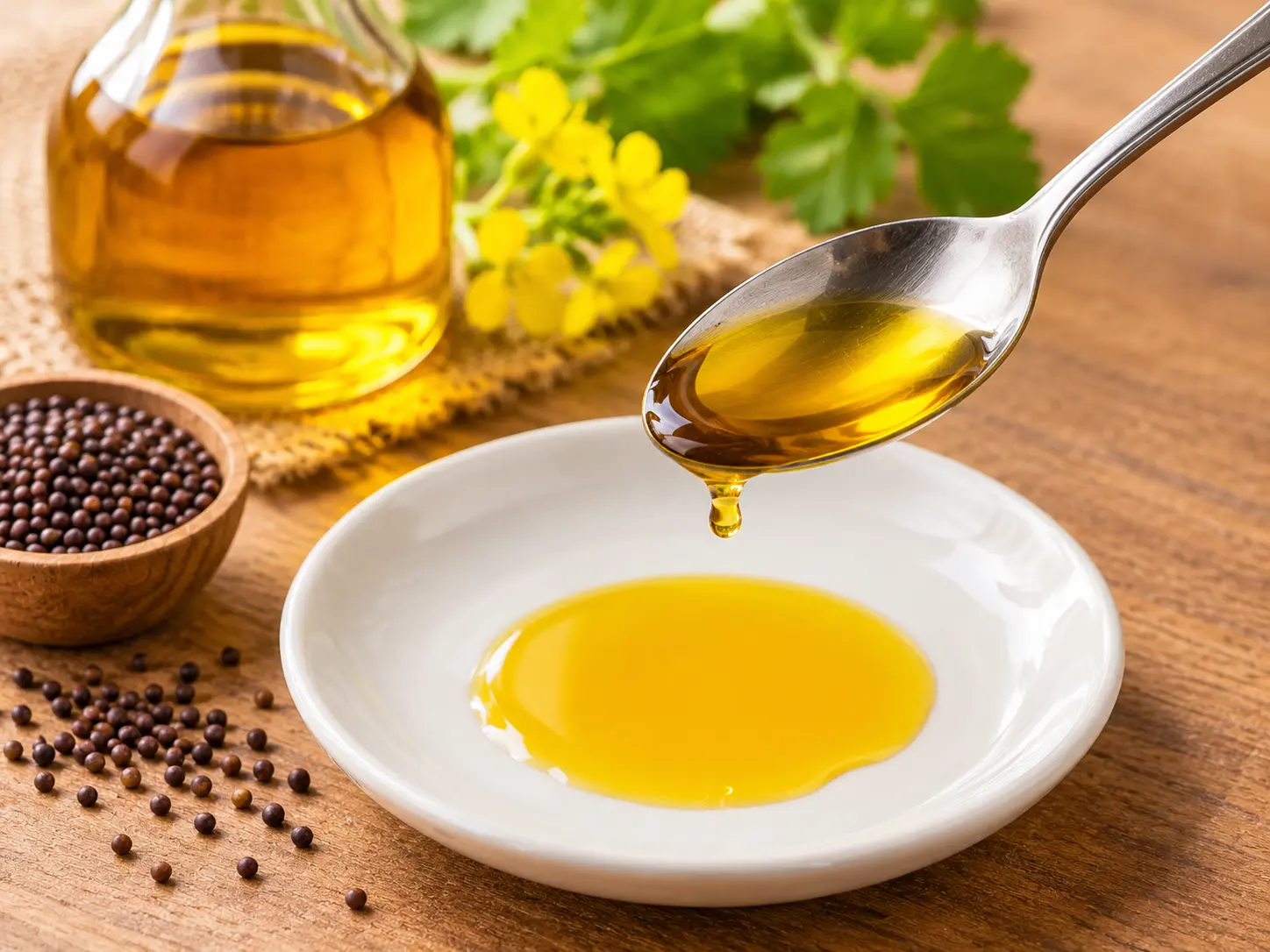
India’s food regulator, the Food Safety and Standards Authority of India (FSSAI), shares consumer-awareness material on simple home checks through its DART (Detect Adulteration with Rapid Test) booklet. The observations below are screening hints only, not proof.
1. Smell and pungency
Pour a few drops on a clean spoon and smell it. Pure mustard oil, especially kachi ghani, has a sharp aroma that you feel in your nose and the back of your throat. A very faint, flat or “greasy” smell can mean it has been diluted or refined, but it is not proof by itself.
2. Colour
Kachi ghani mustard oil is usually golden to amber. An oil that looks watery clear or unusually pale may be refined or blended. Colour varies by seed variety, so compare it with a brand you trust.
3. Taste a tiny drop only if you are sure of the source
A very small drop of fresh, packaged oil should taste sharp and pungent, not bitter, rancid or soapy. If it smells or tastes rancid, stop using it.
4. Look at the pack, not only the oil
A sealed pack with a full label, a batch number and a date tells you more than any kitchen test. This is the most reliable “home check” you have.
What Home Checks Cannot Tell You
Smell, colour and taste can hint that an oil is not what the label claims, but they cannot detect specific adulterants such as argemone oil, mineral oil or other cheaper oils. Only laboratory analysis with a validated method can confirm what is in an oil.
Please do not experiment with nitric acid, sulphuric acid or other chemicals in your kitchen. They can cause burns and harmful fumes, and a home setup will not give a reliable result.
How to Read a Mustard Oil Label Before You Buy

The label is your best tool for choosing pure mustard oil. Check these points:
- Ingredient: it should say mustard oil only, with no “blended” or “edible vegetable oil” added.
- FSSAI licence number and the manufacturer’s or packer’s name and address.
- Batch number, packing date and best-before date.
- Pack integrity: a sealed cap and an undamaged container. Avoid loose or unlabelled oil.
- Process words: “kachi ghani” or “cold pressed” describe how the oil is made, so look for a brand that explains its process clearly.
- Price: pure, traditionally pressed oil costs more to make. A price far below the market rate is a reason to be careful.
- Contact details that you can actually use if you have a question.
Keep your bill and the original pack until the oil is finished.
How to Store Mustard Oil
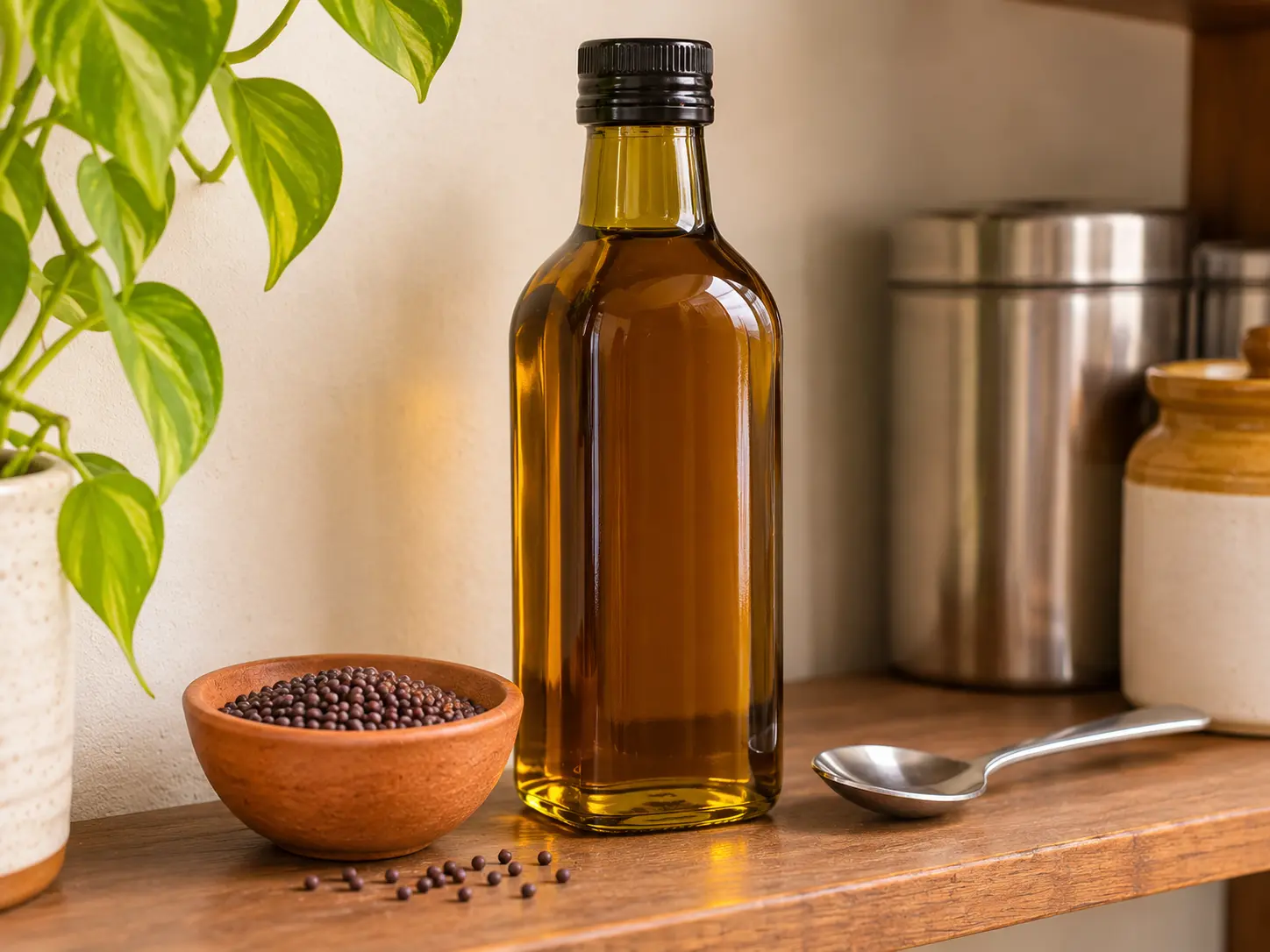
Keep mustard oil in a clean, dry, tightly closed container, away from direct sunlight and heat. Do not top up an old bottle with new oil, and use a dry spoon or pour directly. A fresh, sealed pack stored well will keep its aroma and pungency for longer.
What to Do If You Suspect Adulterated Mustard Oil
- Stop using the oil until the concern is resolved.
- Keep the original pack and the bill.
- Note the batch number and manufacturer details.
- Contact the seller or manufacturer.
- Escalate to your state Food Safety Department or a competent food-testing laboratory if needed.
FSSAI also lists simple checks and videos on its Check Adulteration at Home page.
Also read: How to Check Turmeric Powder for Metanil Yellow at Home and How to Check Red Chilli Powder for Adulteration at Home.
Frequently Asked Questions About Pure Mustard Oil
How can I identify pure mustard oil at home?
Look for a sharp, pungent aroma, a golden to amber colour for kachi ghani oil, and a clear single-ingredient label from a traceable brand. These are hints only and cannot confirm purity.
Can I test mustard oil purity at home with a simple test?
Not reliably. Home observations can show warning signs, but only a laboratory can identify adulterants. Never use acids or chemicals in your kitchen.
What is the difference between kachi ghani and refined mustard oil?
Kachi ghani oil is pressed slowly in a traditional way and keeps its natural colour, aroma and pungency. Refined oil is processed further, so it is lighter in colour and milder in smell.
Does a strong smell mean mustard oil is pure?
A sharp smell is a good sign, but it is not proof, because strong smells can also come from other additions or from rancid oil. Check the label and brand as well.
Is blended mustard oil allowed in India?
FSSAI has prohibited blending mustard oil with other edible oils in packs sold as mustard oil. If you see a blend sold as mustard oil, treat it with caution.
Does an FSSAI licence mean every batch is free from adulteration?
No. A licence shows that a food business operates within the regulatory framework. It is not laboratory certification of each batch, so batch and testing information is still worth checking.
How should I store mustard oil?
In a clean, dry, tightly closed container away from sunlight and heat.
Choosing Pure Mustard Oil for Your Kitchen
Whatever brand you choose, look for a clear ingredient label, batch and date details, a sealed pack and a seller you can reach if you have a question.
Hilvera™, a consumer food brand of Upfront Enterprise from Dehradun, offers kachi ghani black mustard oil under its co-brand Kathait Gold, along with other everyday kitchen essentials, with a focus on quality, clear product information and practical value.
Final Thoughts
Pure mustard oil has a sharp aroma, a natural colour and a clear label from a brand you can trace. Simple checks at home can raise awareness, but they cannot replace laboratory testing. Read labels carefully, keep your bills and report genuine concerns to the right authority.
This article is for general consumer awareness and is not a laboratory method or medical advice.