

Indian Spices Guide
How to Check Coriander Powder for Purity at Home (Sawdust, Husk & Colour)
Coriander powder purity matters more than most people think. Ground coriander (dhaniya powder) goes into almost every curry, dal and masala blend, so a little filler or a poor-quality batch can change the taste of everything you cook. Because the powder is light and easy to bulk up, it is one of the spices people are advised to check.
This guide shows you the simple, safe home checks for coriander powder purity, what they can and cannot tell you, and how to choose better coriander powder when you shop.
Short answer: A glass of water, a pinch rubbed between your fingers and your nose can reveal obvious fillers like sawdust or husk and a flat, musty smell. But home checks cannot confirm coriander powder purity. Only a laboratory can identify a specific adulterant, so never use acids or chemicals at home.
Coriander Powder Purity: What Can Be Mixed In?
Adulteration means adding something that should not be there, usually to increase weight or cut cost. Commonly discussed concerns in ground coriander include:
- Sawdust or wood powder: cheap bulk filler.
- Husk or other plant waste: lowers quality and changes the texture.
- Other powdered fillers: used to dilute the real spice.
- Added colour: used to make a dull or old powder look fresher and greener.
These are concerns, not a claim about any particular brand. Most spice makers follow the rules, and checking is simply a good habit.
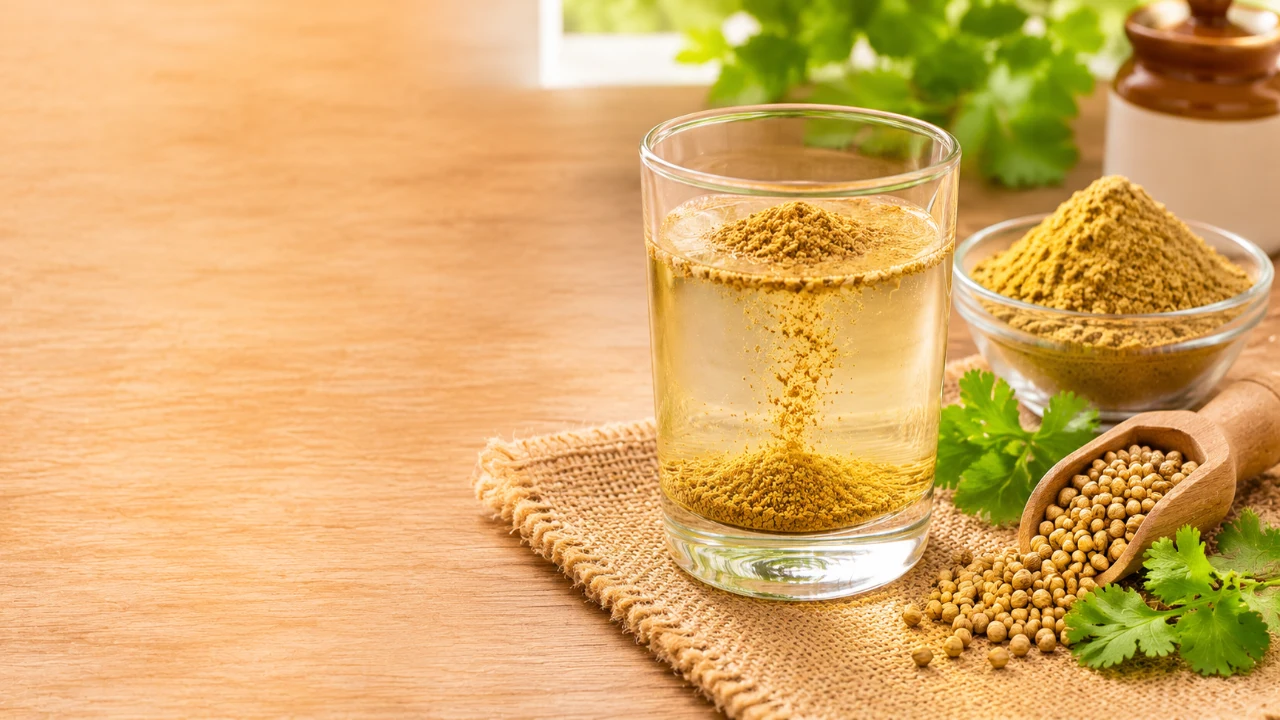
Home Check 1: Water Test for Coriander Powder Purity
India’s food regulator, the Food Safety and Standards Authority of India (FSSAI), shares consumer-awareness material on simple home checks through its DART (Detect Adulteration with Rapid Test) booklet. The water observation below is a preliminary screening, not a laboratory test.
What you need
- A clean, transparent glass
- Plain water at room temperature
- About one teaspoon of coriander powder
Steps
- Fill the glass with water.
- Sprinkle the coriander powder gently on the surface. Do not stir.
- Wait a minute or two and watch how the powder behaves.
- Smell the water after a short while.
How to read what you see
Typical behaviour
Most of the powder slowly sinks and the water turns a light, even colour with a mild, pleasant smell.
Possible warning signs
- A lot of light material floating on the surface for a long time. This may point to husk or sawdust.
- A foul or unusual smell from the water.
- Colour that streaks out quickly and looks unnaturally bright.
Important: Some natural coriander particles float at first because of air and oil in the powder, so a little floating is normal. For a fair comparison, repeat the check with a coriander powder you already trust.
Home Check 2: Rub and Smell Test
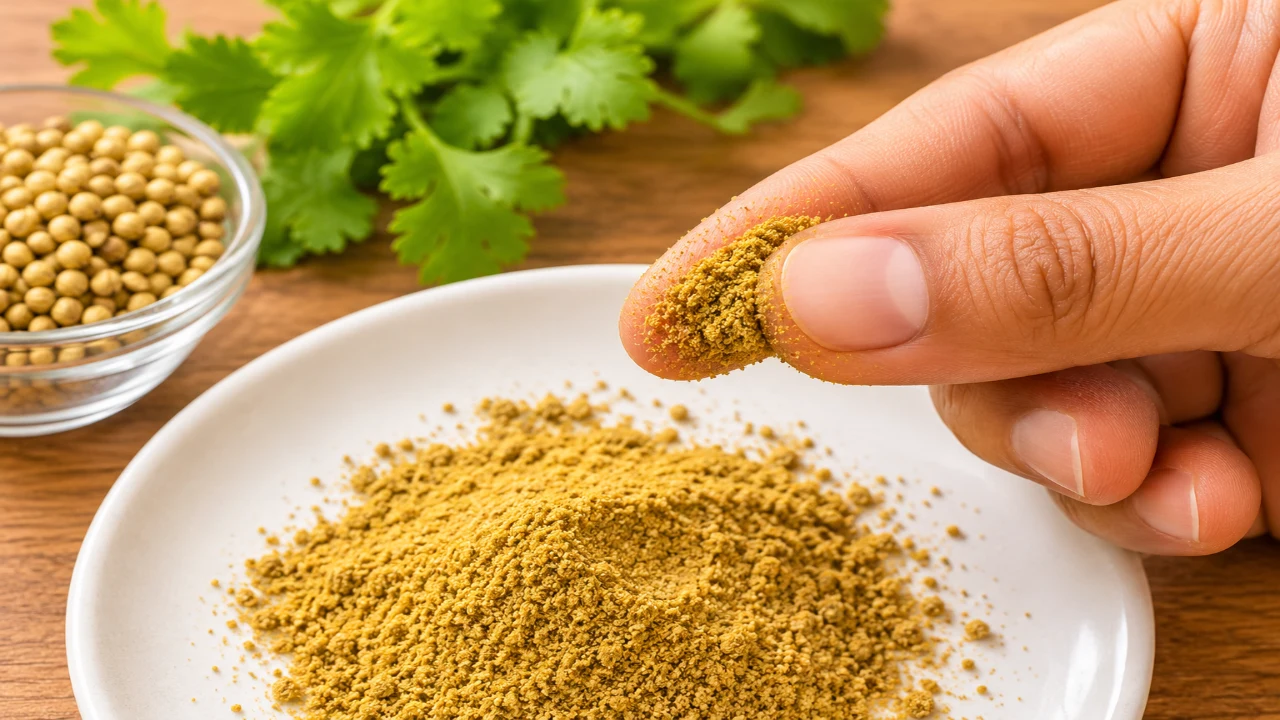
- Take a pinch of coriander powder between your thumb and finger and rub it gently.
- Pure coriander powder usually feels fairly fine and slightly oily. A rough, woody or gritty feel may suggest filler.
- Smell it. Good coriander powder has a warm, sweet and slightly citrusy aroma. A flat, dusty, musty or sour smell can mean old stock, poor storage or added filler.
Coarser grinds exist on purpose, so use grit that feels like wood or sand as the signal, not coarseness alone.
Home Check 3: Colour Check
Natural coriander powder is usually a light golden-brown to greenish-brown, and the shade varies with the variety and the grind. A very bright, even green can be a reason to look closer, but colour alone does not prove anything, and old powder fades to a duller brown.
What Home Checks Cannot Tell You
Home checks can only hint at obvious fillers and unusual smells. They cannot confirm a specific adulterant or any added chemical. That needs laboratory analysis with a suitable validated method.
Please do not experiment with acids, solvents or other chemicals in your kitchen. They can cause burns and harmful fumes, and a home setup will not give a reliable result.
How to Buy Better Coriander Powder: A Practical Checklist
1. Prefer a fresh, recently packed pack
Coriander loses aroma quickly. Check the packing date and best-before date, and avoid very old stock.
2. Smell before you trust the colour
A clear, warm, citrusy smell is a better sign than a bright colour.
3. Read the label fully
- Ingredient declaration (it should say coriander only, unless a blend is stated)
- FSSAI licence number
- Manufacturer or packer name and address
- Batch number, packing date and best-before date
- Storage instructions and a sealed, undamaged pack
4. Buy from traceable sellers
Choose brands and shops with clear contact details. Keep the bill and the pack in case you need to raise a concern.
5. Store it properly
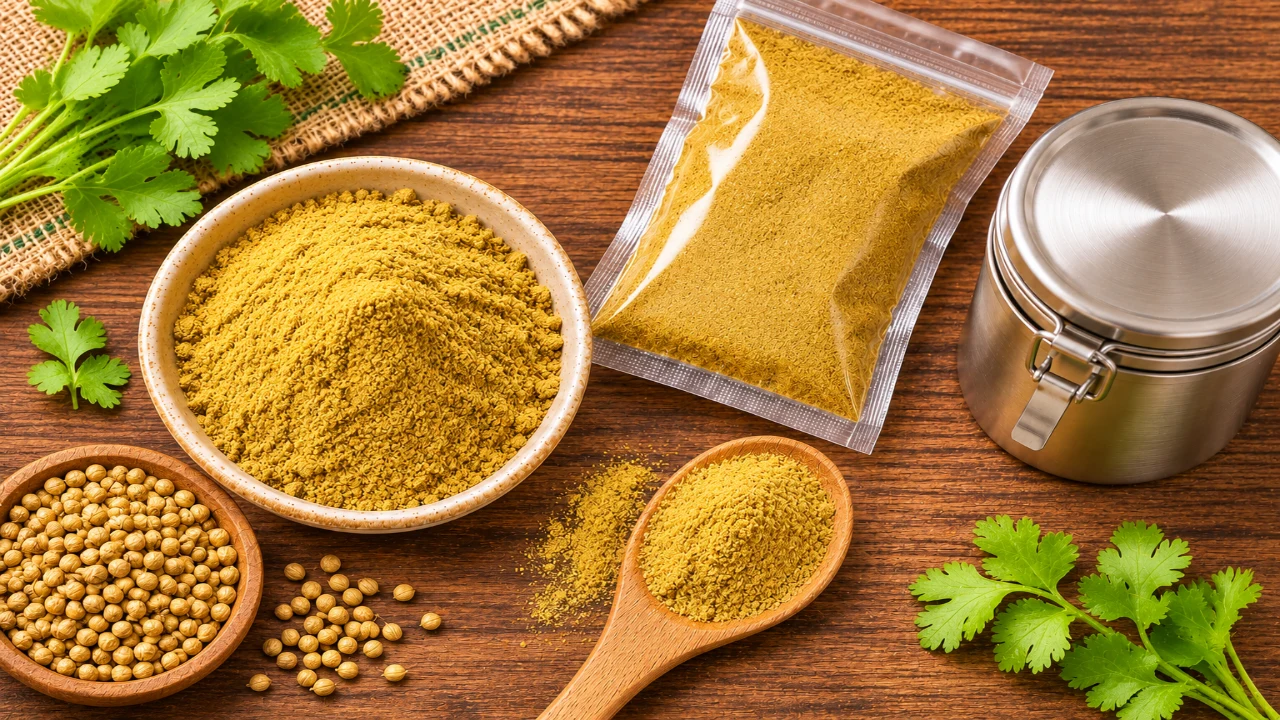
Keep coriander powder in a clean, dry, airtight container, away from moisture, sunlight and heat, and use a dry spoon. Proper storage protects both the aroma and the shelf life.
What to Do If You Suspect Adulterated Coriander Powder
- Stop using the product until the concern is resolved.
- Keep the original pack and the bill.
- Note the batch number and manufacturer details.
- Contact the seller or the manufacturer.
- Escalate to your state Food Safety Department or a competent food-testing laboratory if needed.
FSSAI also lists simple checks and videos on its Check Adulteration at Home page.
Also read: How to Check Turmeric Powder for Metanil Yellow at Home and How to Check Red Chilli Powder for Adulteration at Home.
Frequently Asked Questions About Coriander Powder Purity
How can I check coriander powder purity at home?
Sprinkle a little on water in a clear glass and watch for a lot of floating material or a foul smell, then rub a pinch between your fingers and smell it. These are only screening checks and cannot confirm purity.
Does floating coriander powder mean it is adulterated?
Not necessarily. A little natural floating is normal because of air and oil in the powder. A large amount of light material that keeps floating is a reason to look closer.
How can I tell if coriander powder has sawdust?
Sawdust tends to feel rough and woody when rubbed and may float on water. These are only hints, so test a sample in a laboratory if you are concerned.
What should good coriander powder smell like?
A warm, sweet and slightly citrusy aroma. A flat, musty or sour smell can mean old stock or poor storage.
Does an FSSAI licence mean every batch is free from adulteration?
No. A licence shows that a food business operates within the regulatory framework. It is not laboratory certification of each batch, so batch and testing information is still worth checking.
How should I store coriander powder?
In a clean, dry, airtight container away from moisture, direct sunlight and heat.
Choosing Coriander Powder for Your Everyday Kitchen
Whatever brand you choose, look for a clear ingredient list, batch and date details, clean packaging and a seller you can reach if you have a question.
Hilvera™, a consumer food brand of Upfront Enterprise from Dehradun, offers pure coriander powder along with other everyday kitchen essentials, with a focus on quality, clear product information and practical value.
Shop Hilvera™ Pure Coriander Powder
Final Thoughts
Simple home checks can raise awareness about coriander powder purity, such as obvious fillers and an off smell, but they cannot replace laboratory testing. Buy from traceable brands, read labels carefully, keep your bills and report genuine concerns to the right authority.
This article is for general consumer awareness and is not a laboratory method or medical advice.