


Indian Spices Guide
How to Check Metanil Yellow in Turmeric Powder at Home
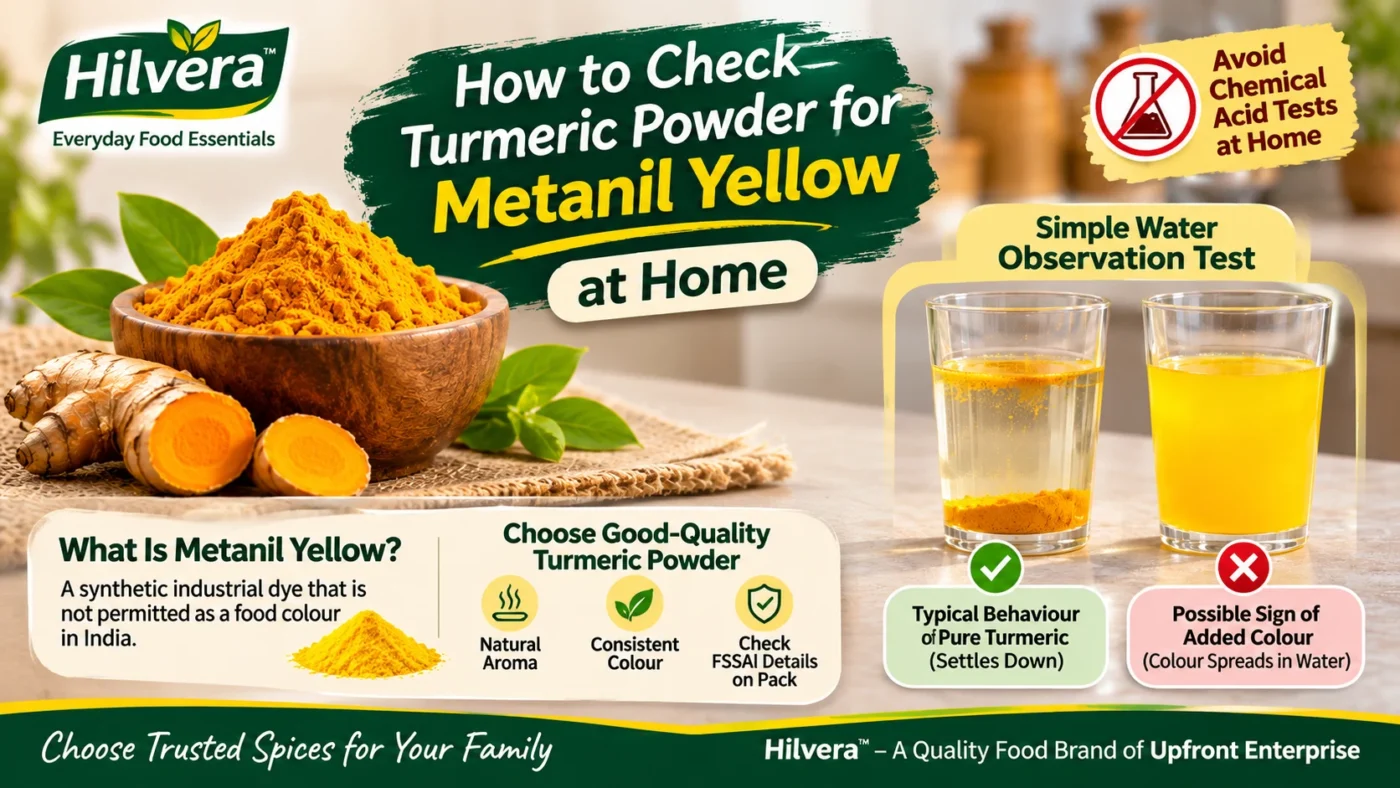
Is your turmeric (haldi) pure? Turmeric powder is a staple in kitchens around the world, from curries, dals and golden milk to rice, soups and marinades, so it matters what is actually in the jar. One concern consumers hear about is adulterated turmeric coloured with Metanil Yellow, an industrial dye that is not an approved food colour.
This guide explains what Metanil Yellow is, how to do the simple turmeric water test used in consumer-awareness material, why it cannot confirm anything on its own, and how to choose turmeric powder with more confidence, wherever you live.
Short answer: A glass of water can show unusual colour behaviour in turmeric powder, but it cannot confirm or rule out Metanil Yellow. Only a food-testing laboratory can do that. Do not try acid or chemical tests at home.
What Is Metanil Yellow?
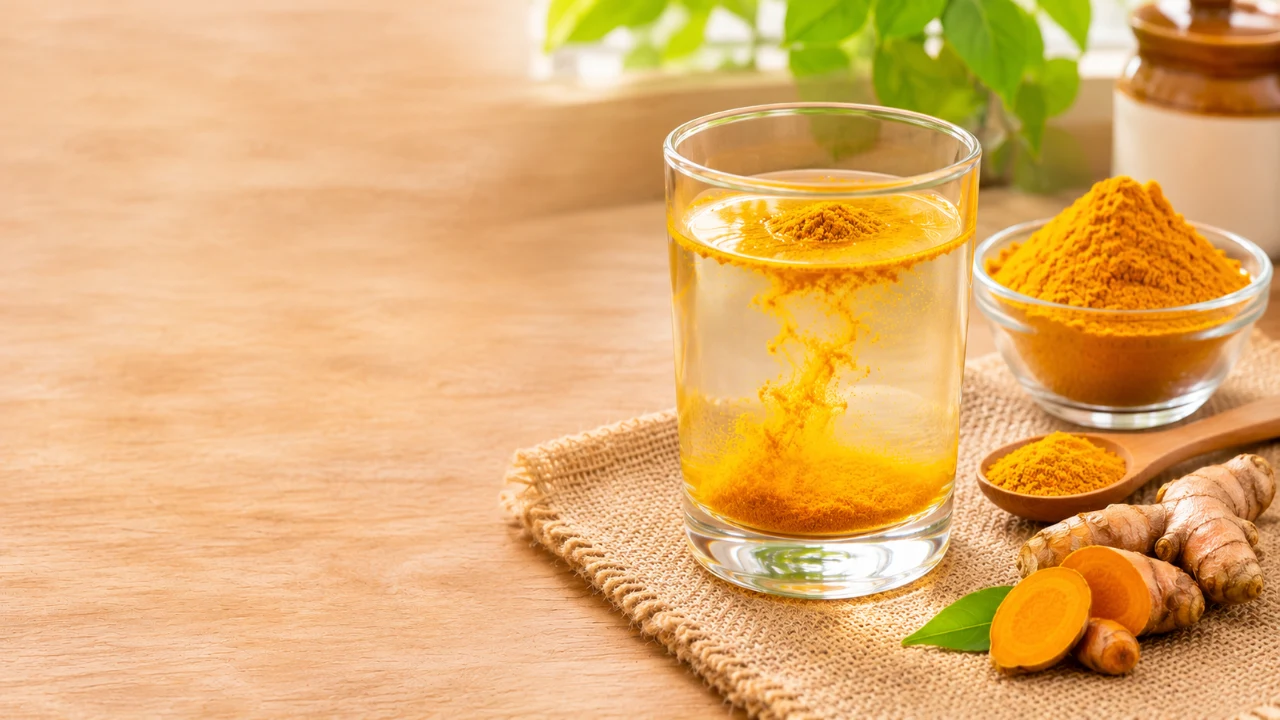
Metanil Yellow is a synthetic azo dye used in non-food industrial applications such as textiles. It is not permitted as a food colour in India, and food regulators in general allow only colours that appear on their approved lists, so a dye like this should never be present in turmeric or any other food.
Why would anyone add it? Artificial colour can make a lower-quality or diluted spice look brighter and more attractive. That is why unusual colour is worth a second look, but a bright colour alone proves nothing.
Does bright yellow turmeric mean it is adulterated?
No. Natural turmeric ranges from pale yellow to deep golden and orange-yellow, depending on variety, curcumin content, growing region and processing. Judge turmeric on traceability, labelling and testing information, not on how vivid the colour is.
Why is it a food safety concern?
Food colours must comply with the rules of the country where the food is sold. Because Metanil Yellow is not an authorised food colour, any product suspected of containing it should be avoided and reported, and visual inspection cannot establish what a food contains. Regulations differ by country, so check your own food authority’s guidance.
The Turmeric Water Test: How to Do It at Home
India’s food regulator, the Food Safety and Standards Authority of India (FSSAI), publishes consumer-awareness material on simple home checks for common adulterants, including the DART (Detect Adulteration with Rapid Test) booklet. The water observation below is a preliminary screening for unusual colour release. It is not a specific test for Metanil Yellow.
What you need
- A clean, transparent glass
- Plain drinking water at room temperature
- About one teaspoon of turmeric powder
Steps
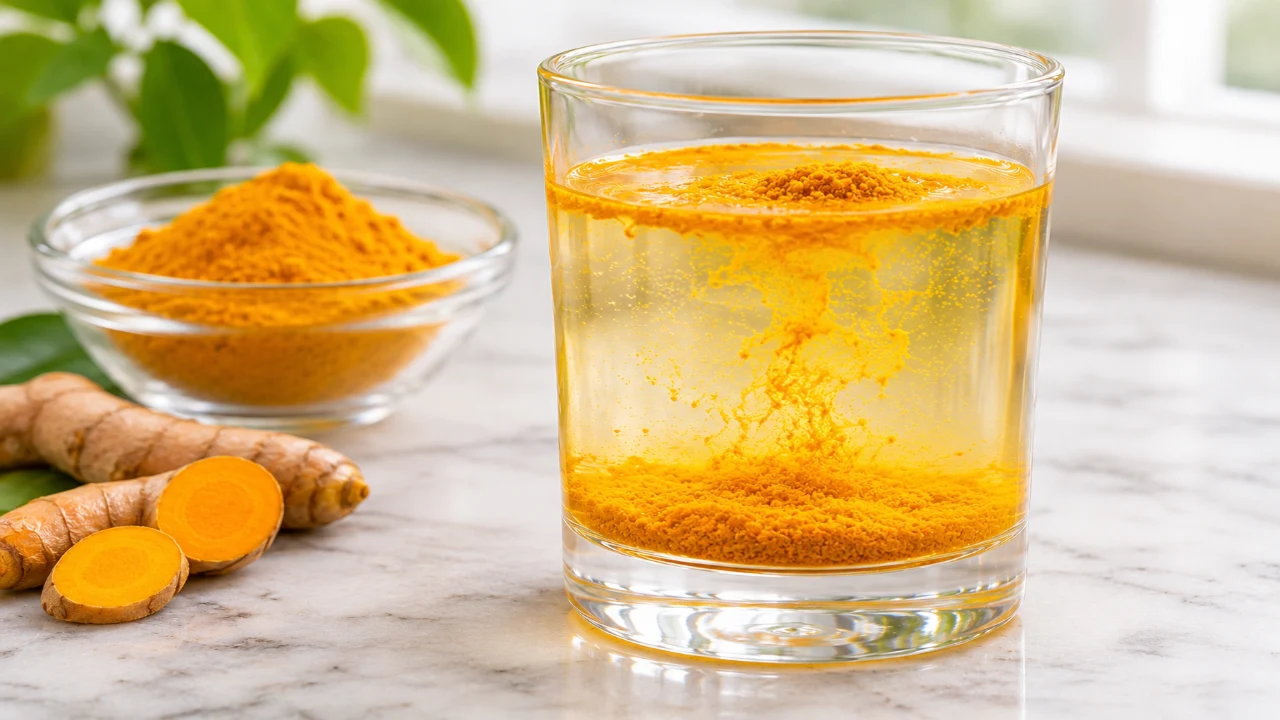
- Fill the glass with water.
- Add the turmeric powder gently, without stirring.
- Let it settle for a few minutes.
- Look at how the colour spreads and how the particles behave.
How to read what you see
| What you see | What it may mean |
|---|---|
| Powder settles toward the bottom; water turns a light, gradually developing yellow | Typical behaviour for natural turmeric |
| Colour spreads quickly and strongly through the water | Unusual colour release. This may indicate added colour, but it is not proof |
Important: Natural turmeric pigments also colour water, and results vary with variety, processing and particle size. If you want a fair comparison, run the same observation on a turmeric you trust. Never label a sample “pure” or “adulterated” on this basis alone.
Home Observation vs Laboratory Testing
| Home water observation | Laboratory analysis | |
|---|---|---|
| Purpose | Awareness and a first look at colour behaviour | Reliable identification of a specific adulterant |
| Can it identify Metanil Yellow? | No | Yes, with a suitable analytical method |
| Risk of false alarm | Yes, natural pigments can colour water | Low when properly performed |
| Cost and effort | Free, two minutes | Needs a sample sent to a competent food-testing lab |
Why You Should Avoid Chemical Tests at Home
Some technical procedures use chemical reagents to detect Metanil Yellow. These are meant for controlled laboratory conditions with proper safety equipment and handling practices.
Please do not experiment with concentrated acids, industrial cleaning chemicals or other laboratory reagents in your kitchen. They can cause burns and harmful fumes, and a home setup cannot give a reliable result anyway.
How to Buy Better Turmeric Powder: A Practical Checklist
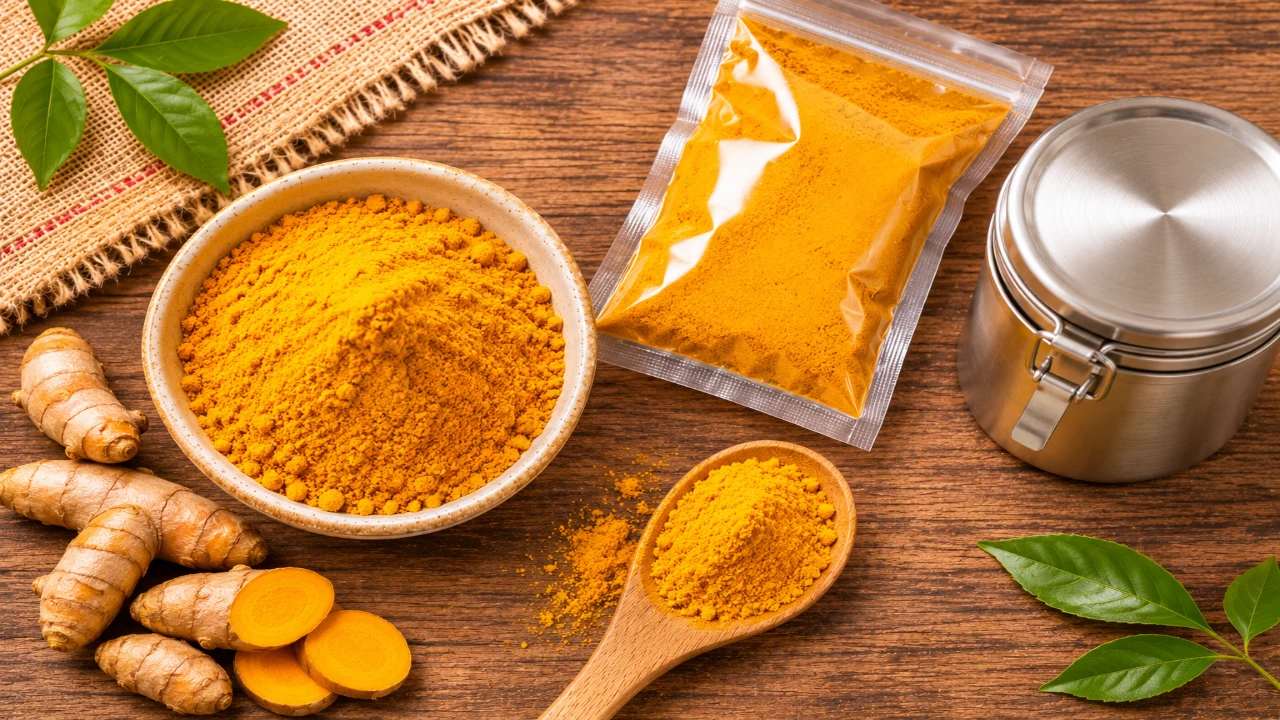
Colour and smell cannot prove chemical purity, but these habits make for better buying decisions anywhere.
1. Do not choose by brightness alone
A neon-bright yellow is not automatically better. Natural colour varies from batch to batch.
2. Smell it
Good turmeric has a warm, earthy, mildly pungent aroma. A musty or off smell points to a storage or quality problem.
3. Read the label fully
- Product name and ingredient declaration (it should list turmeric only, unless a blend is stated)
- Food business licence or registration number (for example, an FSSAI licence in India, or your country’s equivalent)
- Manufacturer or packer name and address
- Batch or lot number
- Packing date and best-before date
- Storage instructions and intact packaging
4. Prefer traceable sellers
Buy from brands that publish contact details and product information. Keep the receipt and original pack in case you ever need to raise a complaint.
5. Store it properly
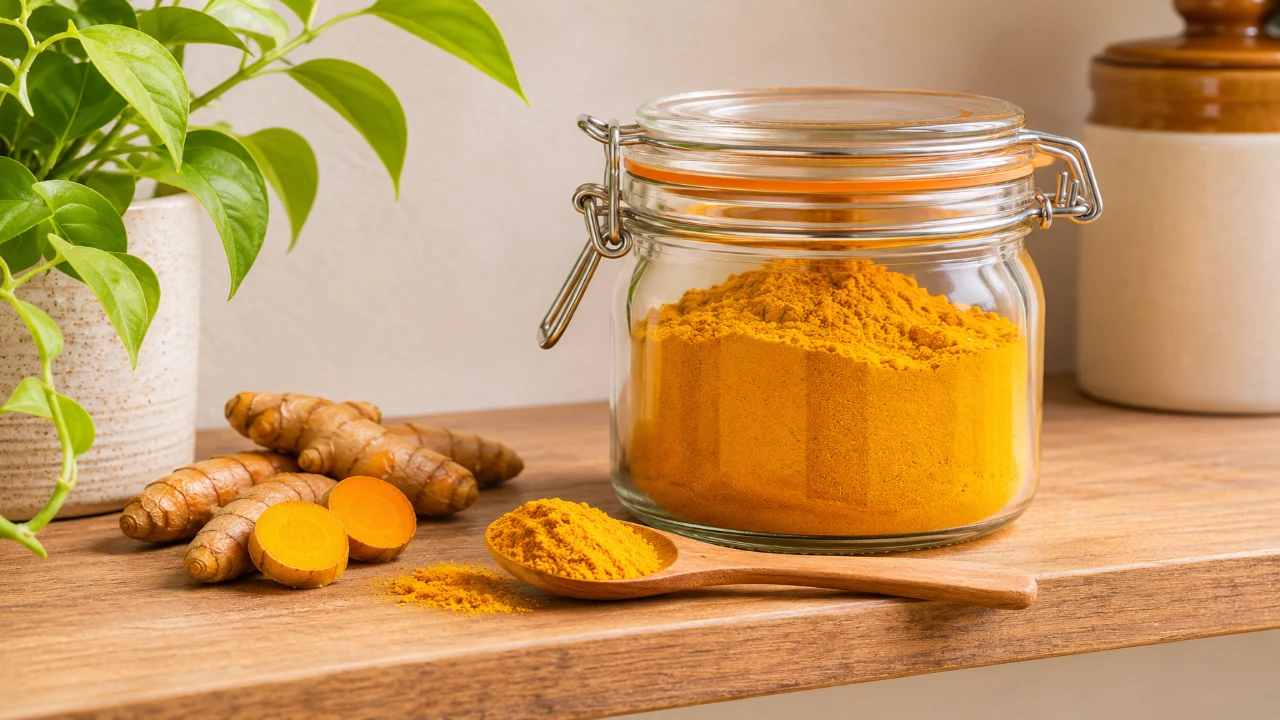
Keep turmeric in a clean, dry, airtight container away from moisture, direct sunlight and strong-smelling items, and always use a dry spoon.
What to Do If You Suspect Adulterated Turmeric
- Stop using the product until the concern is resolved.
- Keep the original packaging and proof of purchase.
- Note the batch number and manufacturer details.
- Contact the seller or manufacturer and report the concern.
- Escalate to your local food safety authority or a competent food-testing laboratory if needed.
FSSAI also lists simple adulteration checks and demonstration videos on its Check Adulteration at Home page, which is a useful reference even if you live outside India.
Frequently Asked Questions About Metanil Yellow in Turmeric
What is Metanil Yellow in turmeric powder?
Metanil Yellow is a synthetic industrial dye that is not an authorised food colour (it is not permitted in food in India). Its presence in turmeric powder is a food safety violation.
Can a water test detect Metanil Yellow?
A water observation can show unusual colour release, but it cannot specifically identify Metanil Yellow. Laboratory analysis is required for confirmation.
Does bright yellow turmeric mean it is adulterated?
No. Natural turmeric varies in colour with variety, origin and processing. Bright colour alone is not proof of adulteration.
Is the turmeric water test scientifically conclusive?
No. It is a preliminary consumer-awareness method and cannot establish the purity or chemical composition of turmeric powder.
How can I confirm whether turmeric contains Metanil Yellow?
Submit a properly collected sample to a competent food-testing laboratory that uses a validated analytical method.
Does a food licence or registration guarantee every batch is free from adulteration?
No. A licence or registration shows that a food business operates within its regulatory framework. It is not laboratory certification of each batch, so batch details and testing information are still worth checking.
How should I store turmeric powder?
Use a clean, dry, airtight container, and keep it away from moisture, direct sunlight and strong-smelling substances.
Choosing Turmeric Powder for Your Everyday Kitchen
Whatever brand you choose, look for clear ingredient declarations, batch and date information, hygienic packaging and a seller you can reach if you have a question.
Hilvera™, a consumer food brand of Upfront Enterprise from Dehradun, India, offers everyday kitchen essentials including turmeric powder, with a focus on quality, clear product information and practical value.
Final Thoughts
Simple home observations can build awareness about unusual colour behaviour, but they cannot replace laboratory testing. Buy traceable products, read labels carefully, keep your receipts and report genuine food safety concerns to the right authority.
At Hilvera™, we believe informed food choices and transparent product information are the foundation of consumer confidence.
This article is for general consumer awareness and is not a laboratory method or medical advice. Food regulations vary by country.